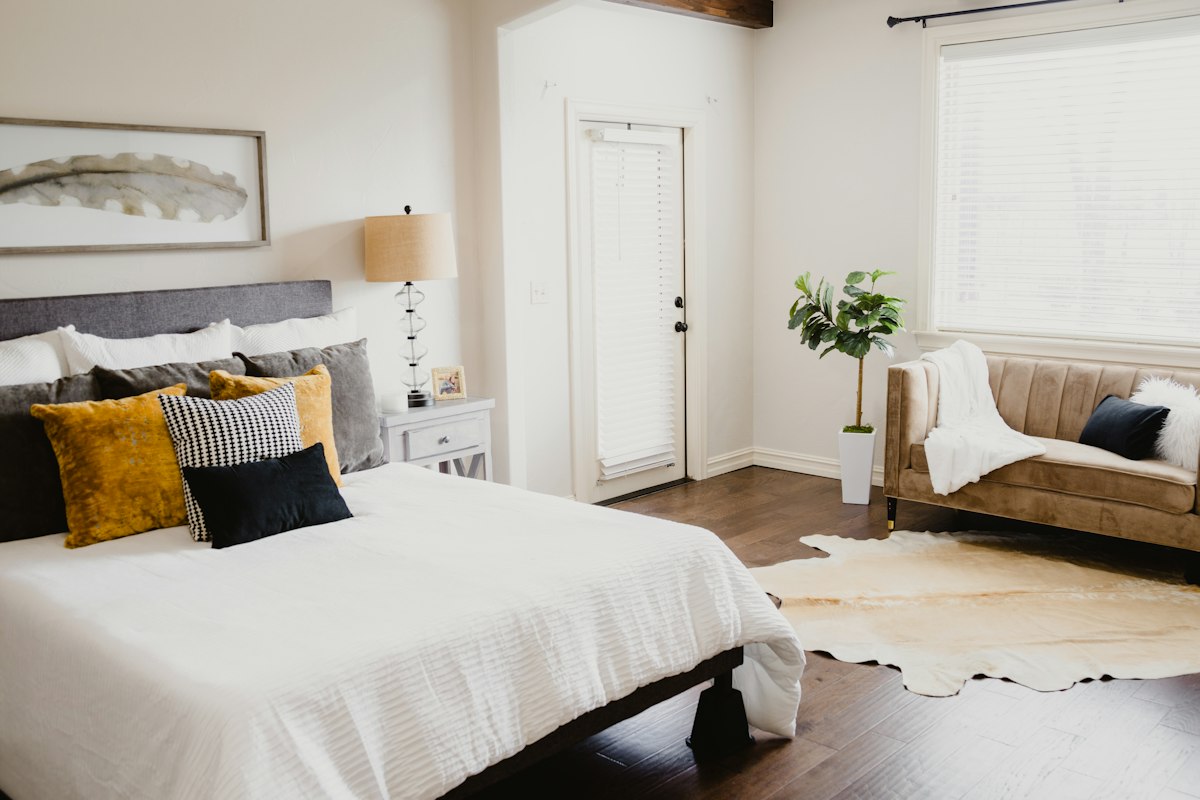
Relate the size of wall art to the bed or furniture below it. A small frame can become lost on a broad wall, while a very large arrangement may compete with the headboard. Use paper templates to test the composition before making holes.
Follow appropriate fixing guidance for the wall and weight. Be particularly careful with heavy or fragile objects near the bed and seek competent installation where needed. Check for concealed services before drilling.
Choose the relationship between the artwork and the furniture below it before choosing a hanging height. A broad bed or chest provides a visual reference that a small isolated frame may not relate to. Try the outline with paper and view it from the doorway. The aim is a deliberate composition rather than filling the largest available patch of wall.
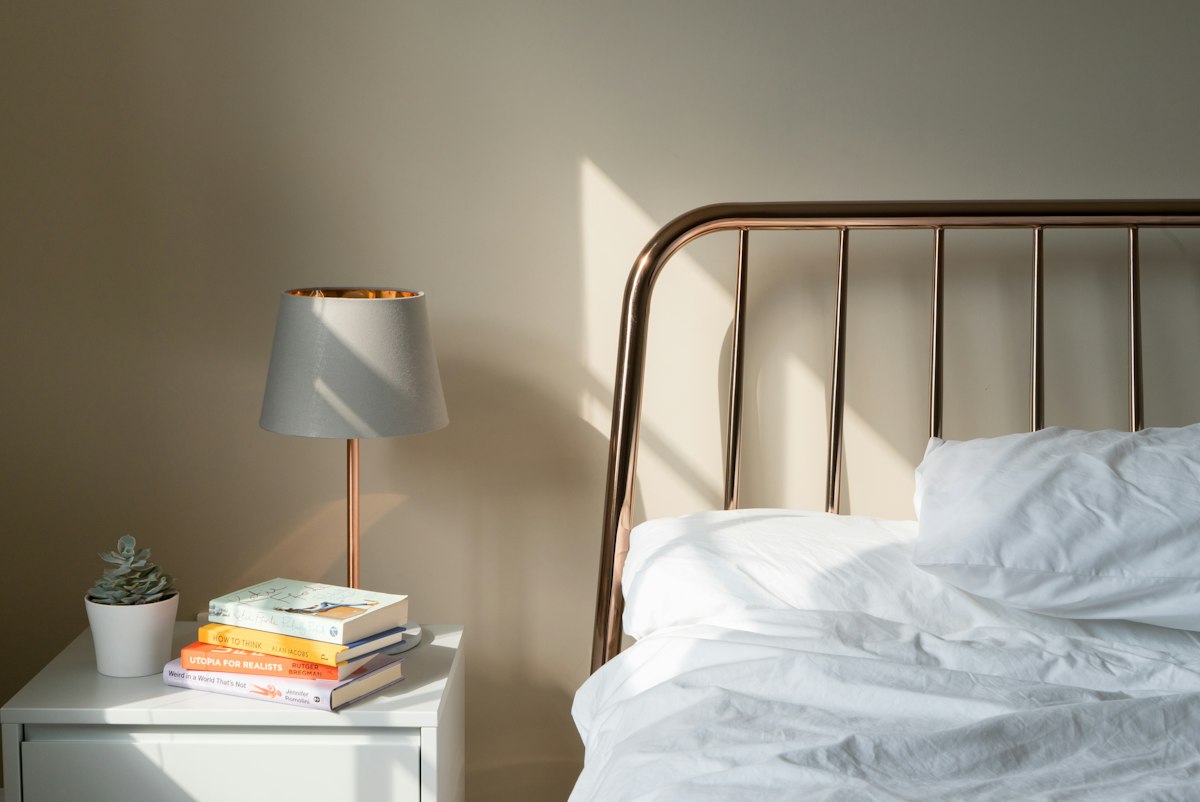
Consider the headboard height and the position of bedside lights together. A frame may fit above the bed yet compete with a decorative headboard or expose an awkward strip of wall. Mark every element on the same elevation. Where several details are already prominent, a quieter single image or an unfilled wall can be the more comfortable choice.
Assess the view while sitting and lying in the bed as well as while standing. The bedroom is experienced from several positions, and a composition that looks balanced from the door may feel close or imposing from the pillow. Keep the emotional tone and visual contrast appropriate to how you want to use the room, without assuming a universal subject is calming.
If arranging several frames, lay them out on a surface or use paper templates first. Decide which edges or centres will establish the relationship and check spacing across the whole group. Avoid repeatedly adding one extra frame to solve an uncertain composition. A smaller group with a clear structure can feel more considered than a crowded collection.
Use fixing methods suitable for the actual wall, frame and weight. Heavy or fragile pieces near the bed deserve particular care and may be better placed elsewhere. Have a competent installer assess uncertain conditions and concealed services before drilling. Adhesive products should only be used within their specified surface and load conditions.
Look at glare and exposure before finalizing the location. A glazed picture opposite a lamp may become difficult to see, while strong sunlight can be unsuitable for some materials. Ask the artwork or framing supplier about appropriate care. Keep access for cleaning without requiring an awkward reach over delicate bedside objects.
Live with the paper arrangement for a few normal days before committing to the holes. Check it with the curtains open and closed and the usual lamps switched on. This simple trial is especially useful when the wall contains several permanent elements that cannot be moved later.
Consider the view in both daylight and bedside lighting. A quiet composition may be more comfortable than a crowded gallery in a small room. Choose pieces you want to live with rather than treating every empty wall as unfinished.
Check dimensions against your room and follow furniture anchoring, textile care and electrical safety instructions. Use a competent installer for uncertain wall fixings and appropriately qualified help for permanent service changes.