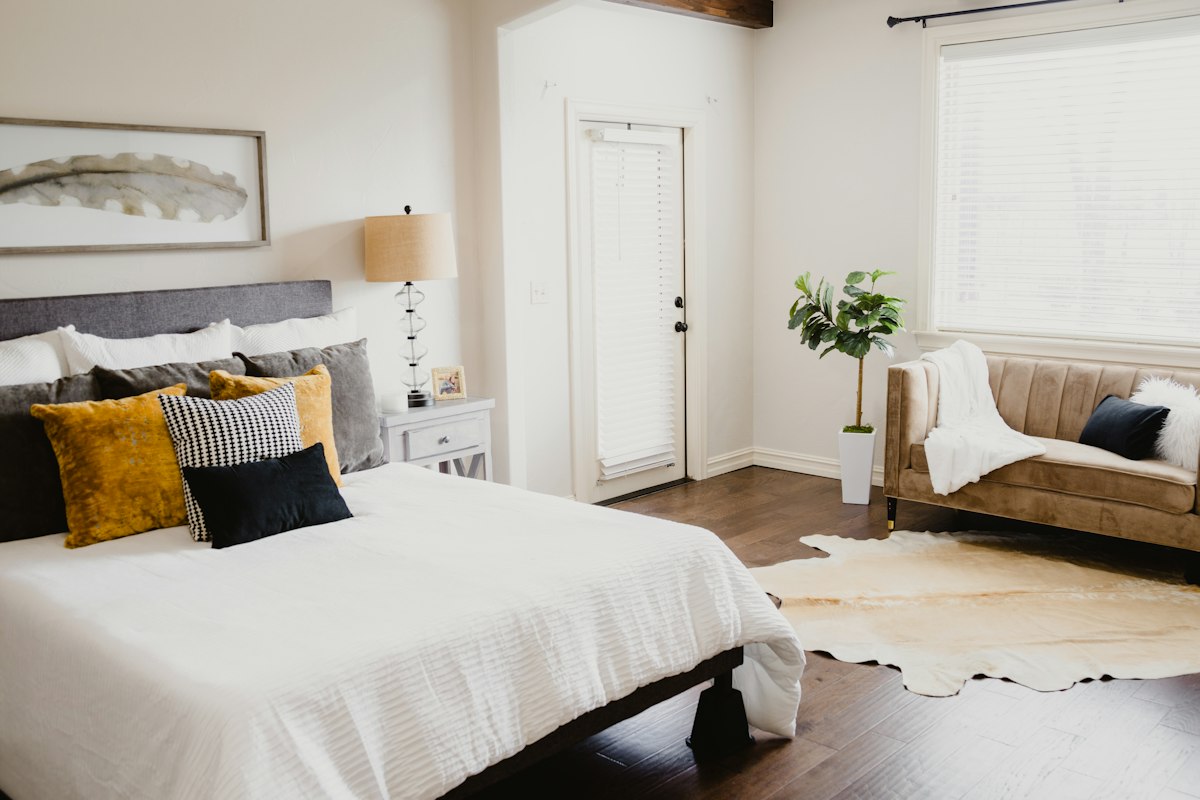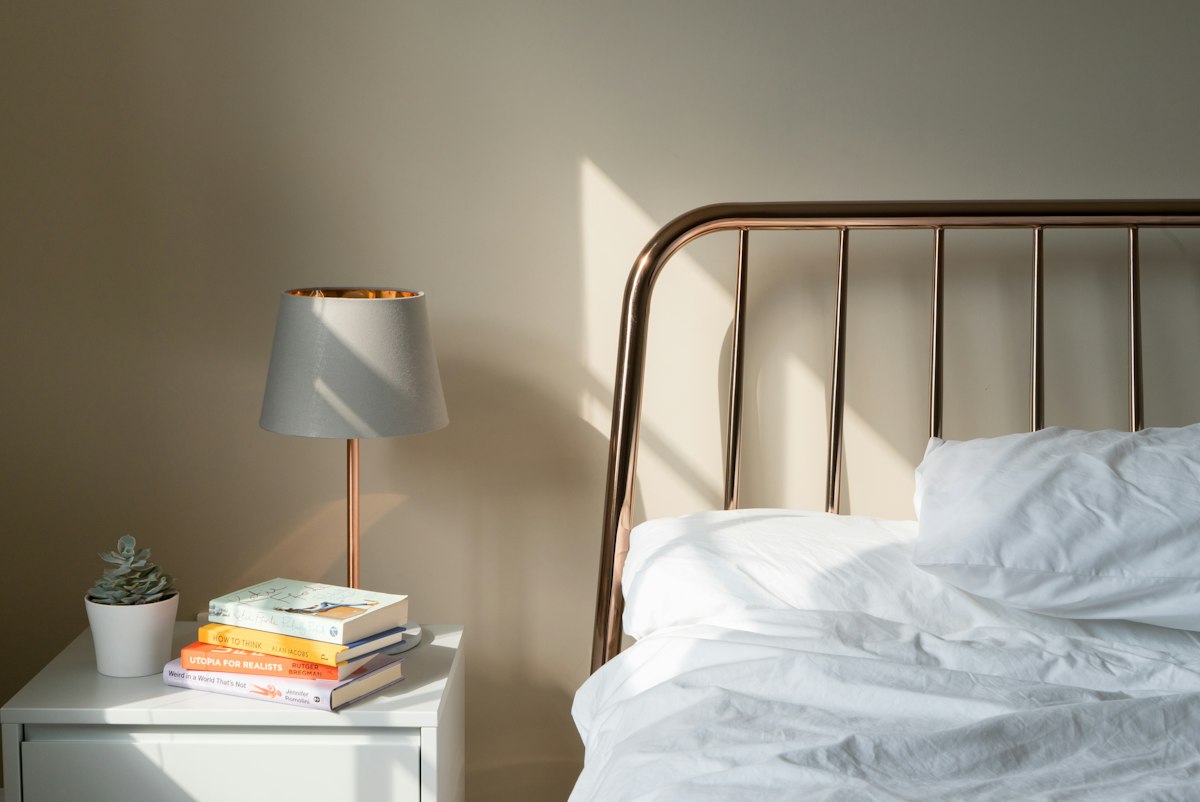
Discuss the needs of both users before arranging furniture. Different waking times, reading habits and storage preferences can affect the plan. Provide comfortable access to each side of the bed where the room allows it rather than relying on one shared route.
Use separately controlled bedside light and practical storage for each person. Consider how wardrobe doors and drawers operate during the busiest part of the day. Keep equipment and charging leads from spreading into the other person space.
Talk through the busiest parts of the day before choosing the arrangement. One person may dress early while another sleeps later, or both may need the wardrobe at once. Draw these routes alongside the bed footprint. This reveals conflicts that a symmetrical furniture layout can conceal, especially when a single narrow passage serves every storage compartment.
Give each user a comfortable way to reach the everyday items they need. Separate bedside surfaces do not have to be identical if the available space differs. A shallow shelf may suit one side while a drawer works on the other. Relate the finishes or colours so the choices feel connected without forcing unsuitable furniture into an awkward corner.
Check reading lights from both pillows and agree how they are controlled. A light positioned only for one reader can shine into the other side of the bed. Try portable options before committing to fixed fittings where practical. Have a qualified electrician assess fixed lighting and switching so the arrangement supports actual routines rather than a decorative elevation alone.
Divide storage according to what each person owns rather than allocating equal looking sections automatically. Someone with long hanging garments may need a different interior from someone who mainly uses folded clothes. Keep shared bedding and seasonal items in a clearly understood place. The arrangement should make putting things away simple for both people without requiring a complicated system.
Discuss charging, work equipment and small objects that accumulate near the bed. Provide suitable surfaces and safe power access rather than allowing leads and devices to spread into the other person route. Follow equipment ventilation guidance and keep chargers away from bedding. Avoid using the floor as routine overflow for items needed every evening.
Use a shared palette for the largest elements and allow smaller differences in texture or bedside objects. A room can feel balanced without every possession being matched. Try proposed changes for several ordinary mornings before adding more furniture. If a particular activity repeatedly interrupts the other person, address its location rather than buying accessories to hide the congestion.
Agree which decisions matter most to each person before making expensive purchases. Bed size, accessible storage and independent light may deserve priority over a perfectly matched furniture set. Recording those priorities can make a practical compromise easier when the room cannot accommodate every preferred feature.
Connect the room through a shared palette while allowing small differences in bedside arrangements. A balanced room does not require identical furniture. Review the layout after using it and adjust details that create repeated interruptions.
Check dimensions against your room and follow furniture anchoring, textile care and electrical safety instructions. Use a competent installer for uncertain wall fixings and appropriately qualified help for permanent service changes.