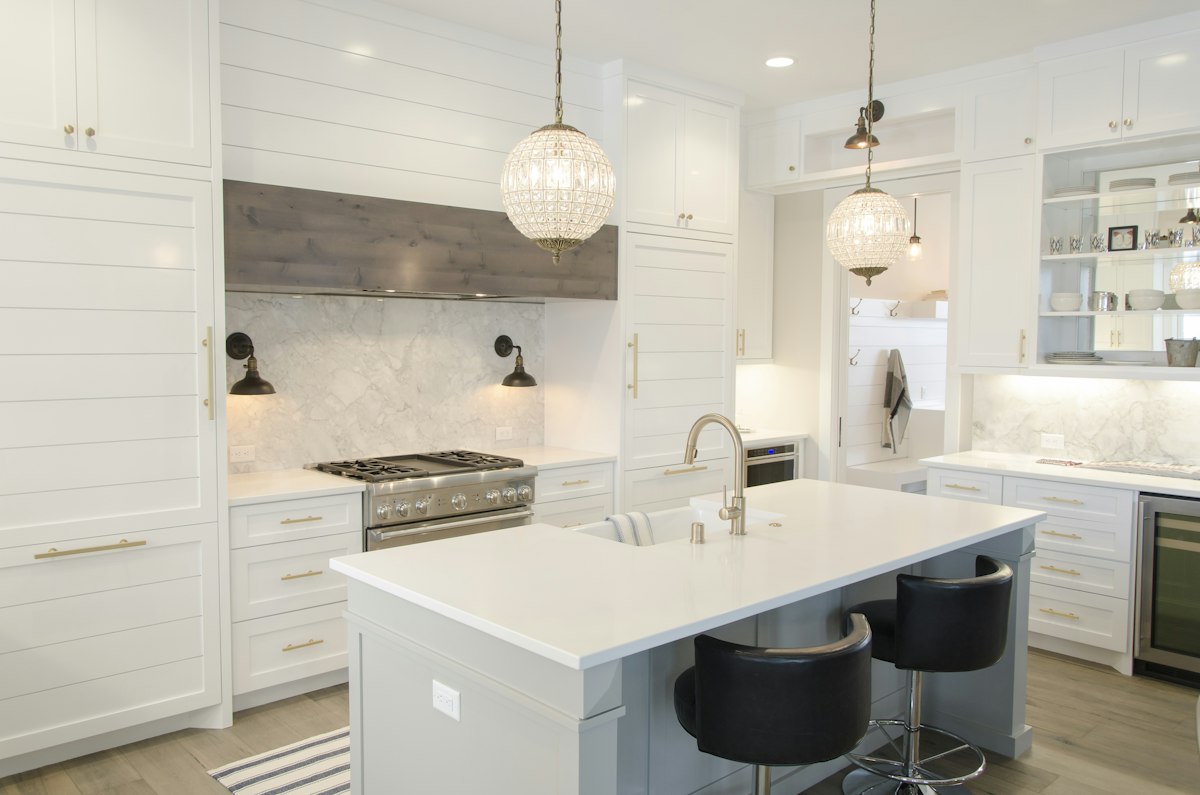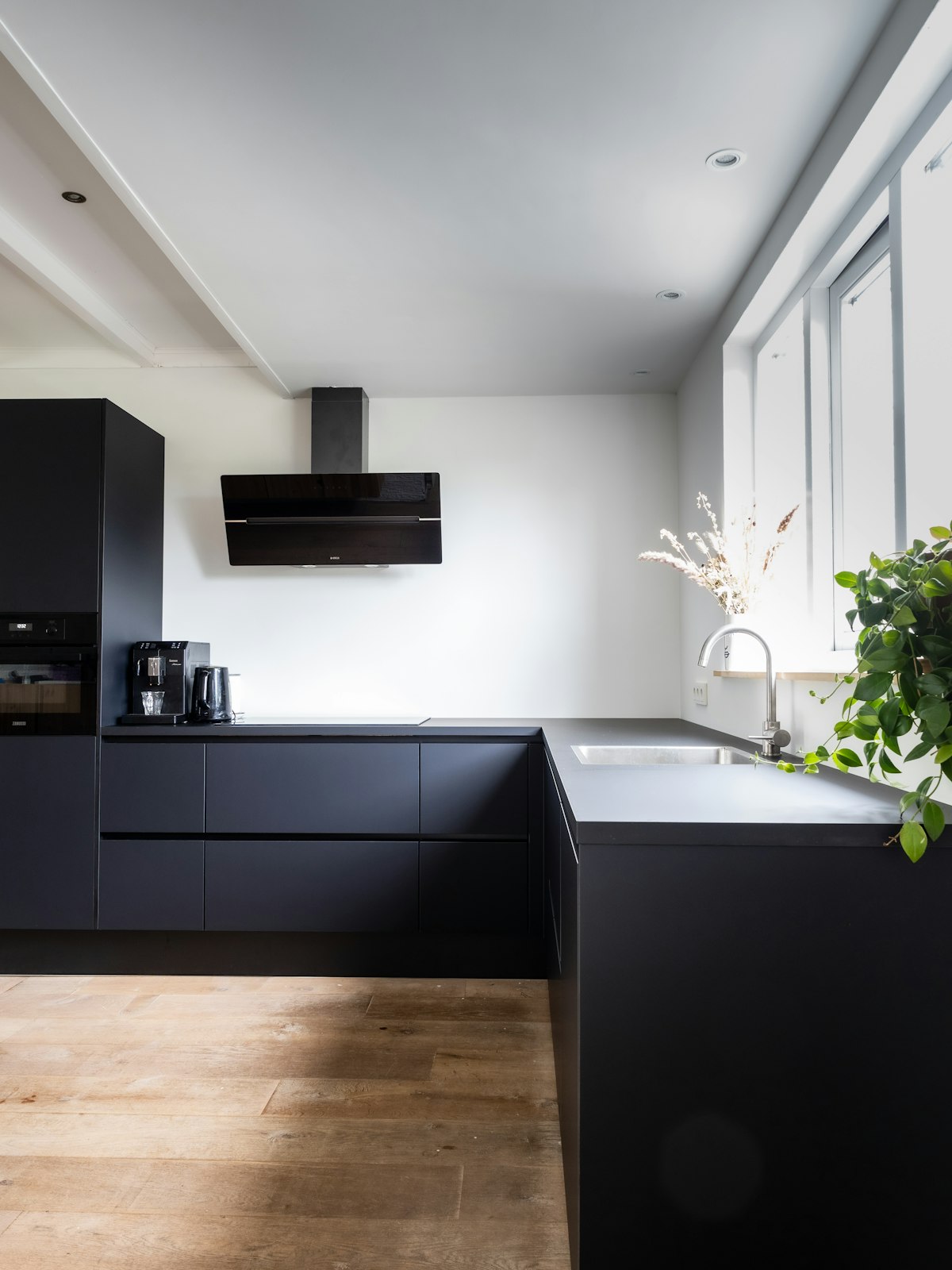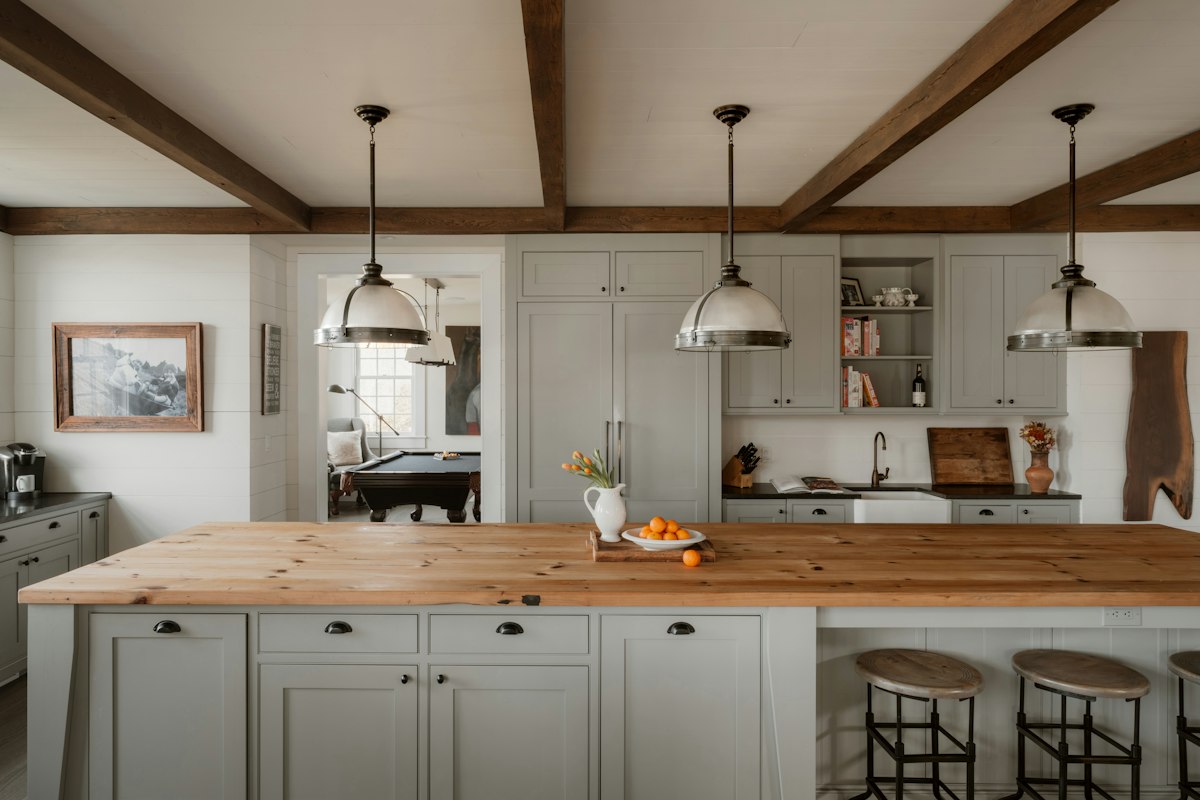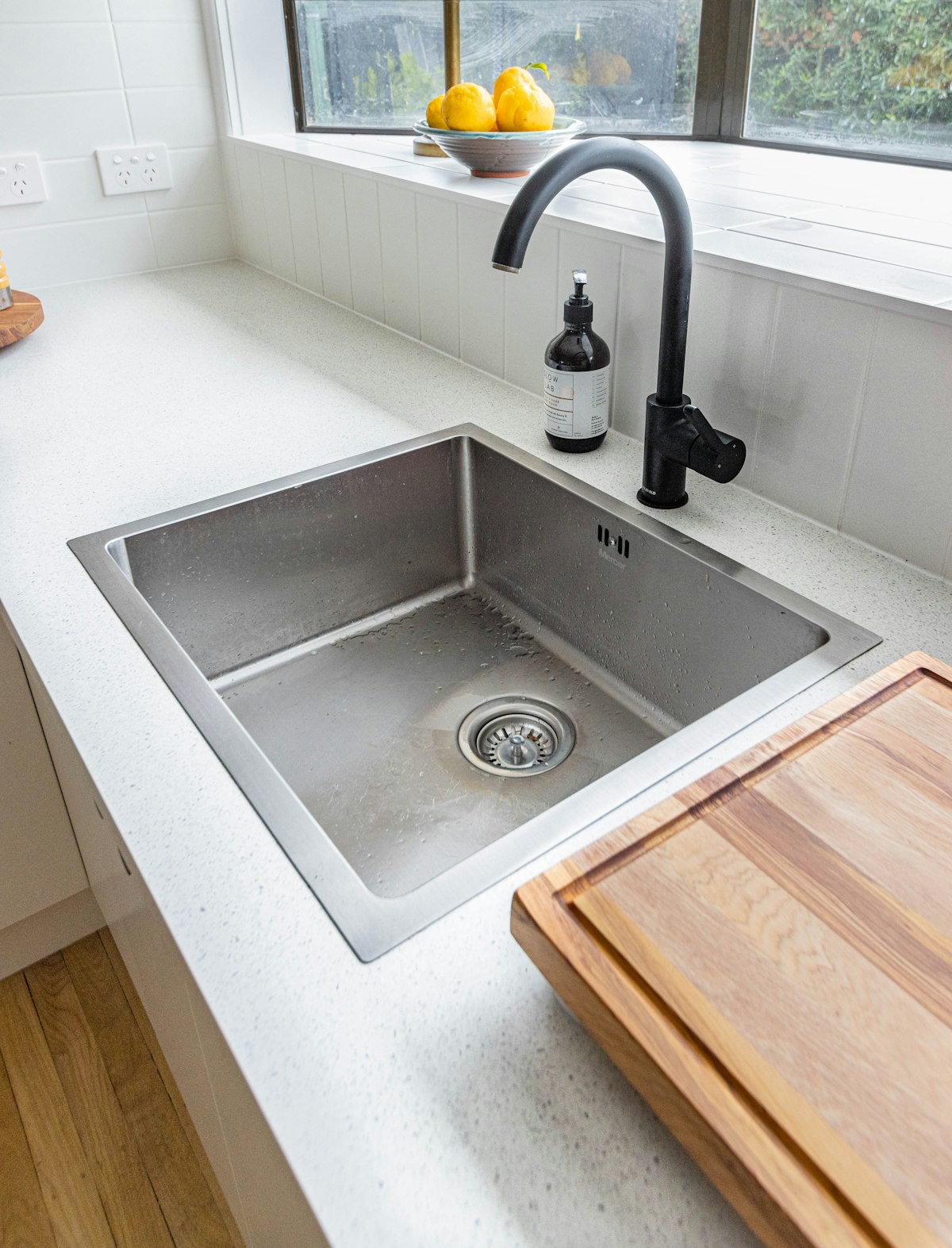
Choose a colour in relation to the room light and the finishes you will keep. A small kitchen does not automatically need white cabinets. A warm muted tone can add depth when the worktop and walls provide enough visual calm around it.
Test a large sample both beside the window and in the darkest corner. Cabinet surfaces receive light differently from a flat wall sample. View the colour under the intended task lighting before approving a finish for the entire room.
Keep competing patterns limited if the colour is doing most of the visual work. Repeat a timber or metal tone to connect the kitchen with adjacent spaces. Choose a finish with suitable care instructions rather than treating colour as the only purchasing decision.
Study the fixed materials before choosing a strong cabinet or wall colour. Existing stone, timber and flooring often contain undertones that will affect the new shade. Compare physical samples together rather than deciding from a colour name. A muted orange, green or blue can feel settled when it relates to those materials, while an apparently safe neutral can emphasize an unwanted contrast.
View samples on the plane where they will be used. A flat painted card on a table receives light differently from a vertical cabinet front. Move a larger sample near the window and into the darkest corner, then look again under the intended task lighting. This helps distinguish a colour you enjoy in a bright showroom from one that works throughout the actual kitchen.
Decide which part of the room should carry the colour. Strong cabinetry may be supported by quieter walls and worktops, while a painted wall can give character to retained plain fronts. Avoid introducing several competing patterns at the same time unless their relationship has been tested carefully. A controlled scheme can make a small kitchen feel intentional without relying on white everywhere.
Consider maintenance and finish alongside the visual choice. Fingerprints, sheen and cleaning requirements vary with the exact product. Follow supplier guidance for preparation and care rather than assuming any coating can be applied successfully to any cabinet surface. An attractive colour should not require choosing a finish that is unsuitable for repeated use in the location.
Connect the kitchen with adjoining rooms through a repeated material, neutral or small accent where useful. The spaces do not need identical colours, but the transition should be considered from ordinary viewpoints. Keep a record of approved shades and avoid reopening the entire palette for each new inspiration image. A coherent small kitchen gains character through a few resolved choices rather than many isolated decorative ideas.
Keep a large sample beside the retained finish for several days before making the final colour decision. A shade can look settled in afternoon light and unexpectedly dull under the lamps used at dinner. That observation is more useful than choosing solely from a bright online image whose surrounding materials and lighting differ from your home.
Before ordering, check the exact product drawings and installation instructions with your supplier. Have plumbing, electrical, ventilation and other specialist work assessed and completed by appropriately qualified professionals.