Start with the clear route from the door to the wardrobe and window. Place the bed where it allows comfortable movement rather than automatically centering it on the longest wall. Measure the full frame and the depth of nearby storage.
Use shallow furniture where a standard cabinet would pinch the route. Avoid distributing many small pieces along both sides of the room. A limited palette and clear surfaces can make the arrangement feel more coherent without changing the physical dimensions.
Draw the room with actual wall lengths, openings and any projections. A long bedroom may include a shallow section that cannot comfortably support full depth storage. Measure at the height where furniture will sit, since skirting and other details can affect its position. A rough floor area alone does not reveal the narrow points that control the layout.
Compare bed positions using the route to the wardrobe and door as the main test. Centering the bed on a wall can look balanced while leaving one side difficult to use. An offset arrangement may be more practical if it protects the important passage. Discuss the needs of both sleepers before sacrificing access on one side.
Check furniture in its open and occupied positions. A chest of drawers needs space for the person standing in front of it, not simply the drawer extension. A chair requires room to pull back and turn. Test these movements with a temporary outline so the final plan does not depend on keeping every movable object perfectly tucked away.
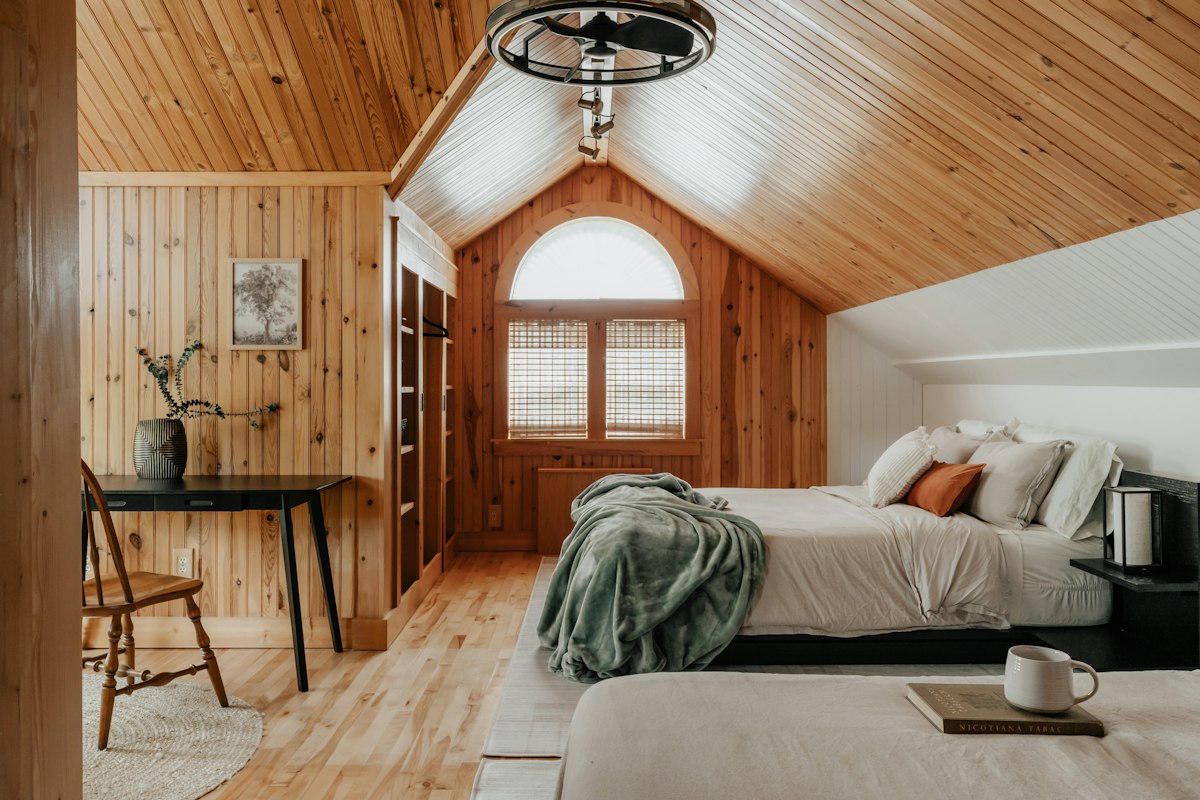
Use storage depth deliberately rather than putting standard cabinets along both long walls. A shallow unit may hold everyday items without narrowing the central route as much. Tall storage at one end can sometimes give the rest of the room more breathing space. Verify its fixing requirements and keep windows, ventilation and service access unobstructed.
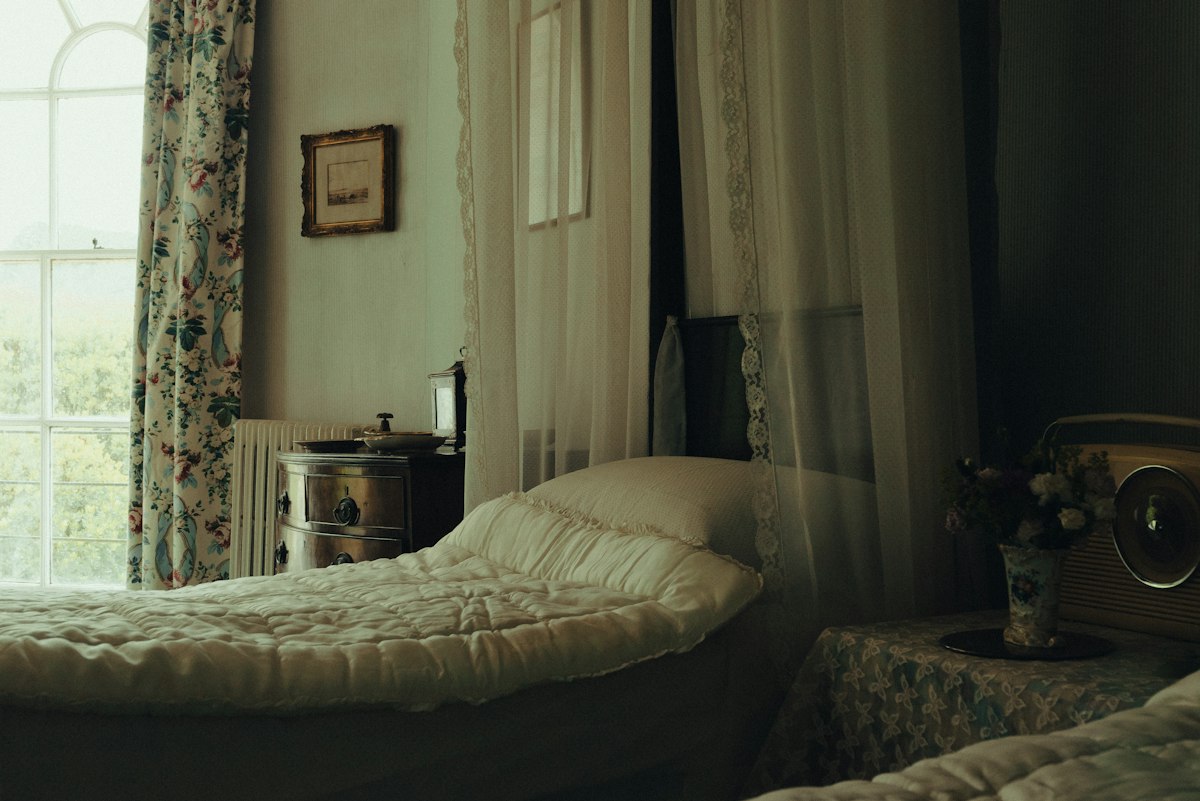
Consider how lighting and colour connect the length of the room. A limited palette can make separate furniture feel more coherent, while useful light near the wardrobe keeps the far end from becoming an unused dark zone. Avoid expecting a decorative stripe or mirror to compensate for an impractical plan. The physical arrangement still needs to work when every light is off.
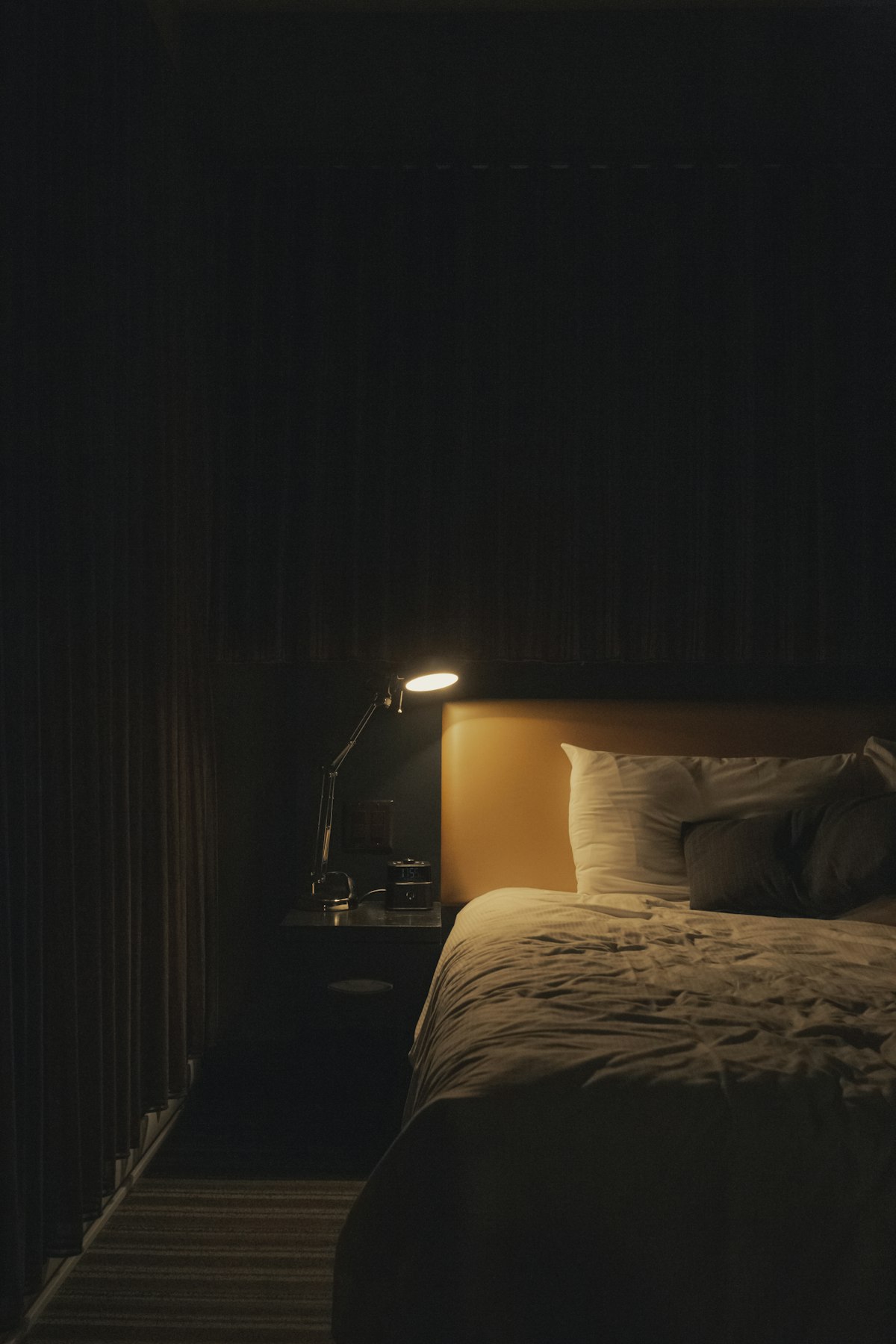
Look at smaller alternatives before giving up a needed function. A compact bedside shelf, a suitable wall light or a less projecting bed frame may preserve useful circulation. Fixed lighting and uncertain wall fixings need appropriate professional assessment. Choose changes for the space they genuinely recover rather than for a minimal appearance alone.
Walk through the proposed layout carrying laundry or changing the bed, since these activities reveal tight turns quickly. If an optional bench or decorative chair repeatedly gets in the way, remove it from the plan. A narrow room benefits from keeping only the furniture that earns its footprint.
Test drawers and doors in their open positions on the plan. Consider whether a wall light could free a small bedside surface, with suitable professional installation. The best layout keeps the room easy to use at the times you are least inclined to rearrange it.
Check dimensions against your room and follow furniture anchoring, textile care and electrical safety instructions. Use a competent installer for uncertain wall fixings and appropriately qualified help for permanent service changes.