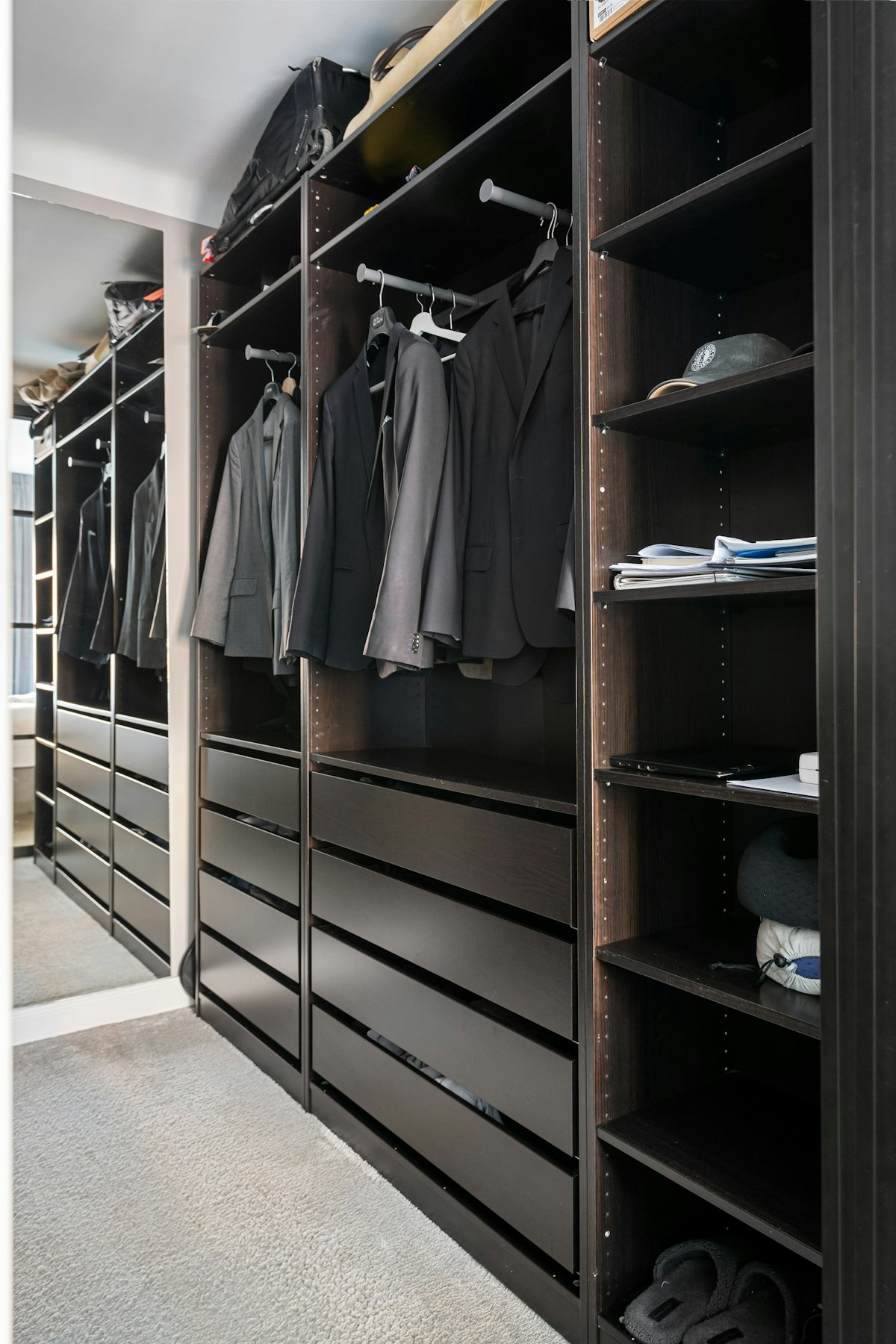
Measure the clothes and accessories you actually own before specifying rails and shelves. Long garments, folded knitwear and shoes need different spaces. A uniform interior may look orderly in a drawing but waste capacity for your particular collection.
Place frequently used items within comfortable reach and use higher sections for lighter occasional belongings. Compare drawers with open shelves for small items. Ask the supplier about shelf spans, hardware loads and safe fixing for the complete unit.
Sort clothing into the ways it is actually stored before drawing the interior. Hanging jackets, long dresses and folded shirts do not need identical compartments. Measure a few representative items on their usual hangers, allowing for the fabric rather than only the hanger width. This prevents a rail that looks generous on paper from producing crushed or dragging clothes.
Check how easily you can see and retrieve items at the back. A deep shelf may work for bedding but hide a second row of folded garments. Pullout storage can improve visibility, though it introduces hardware and space requirements. Ask the supplier to demonstrate the proposed arrangement with objects similar in size to yours rather than with a few empty display boxes.
Allow a clear home for small items that otherwise spread across the bedroom. Socks and accessories may be easier to manage in shallow drawers or simple dividers than on tall open shelves. Keep the system understandable without elaborate labelling. The aim is to reduce the effort of putting clothes away, not to create an arrangement that only looks tidy when nearly empty.
Plan around the door system while specifying the interior. An internal drawer can be blocked by a sliding panel or by a hinged door that does not open far enough. Check these relationships on the technical drawing and in a display where possible. The visible cabinet width is not always the same as the width through which its contents can be reached.
Consider the different users of a shared wardrobe. Give each person accessible space for everyday clothing and discuss which belongings can share a higher shelf. Do not place heavy cases above head height merely because there is an unused cavity. Confirm the intended loading with the supplier and make sure the complete furniture is appropriately fixed.
Leave a little capacity for changing routines rather than designing every compartment around the current arrangement. Adjustable shelves and replaceable internal fittings can help, provided their support is suitable. Keep the specification and hardware references after installation. Review the layout after several weeks of use before buying additional organizers that may duplicate what is already there.
Check shoe storage with actual pairs rather than a catalogue illustration. Boots and wider shoes can use the available depth differently, and a shelf that looks tidy in a display may not support the household collection comfortably.
Keep some flexibility through adjustable components where practical. Review the plan after sorting items you no longer need. A wardrobe should make getting dressed easier rather than require new habits simply to justify an elaborate storage system.
Check dimensions against your room and follow furniture anchoring, textile care and electrical safety instructions. Use a competent installer for uncertain wall fixings and appropriately qualified help for permanent service changes.