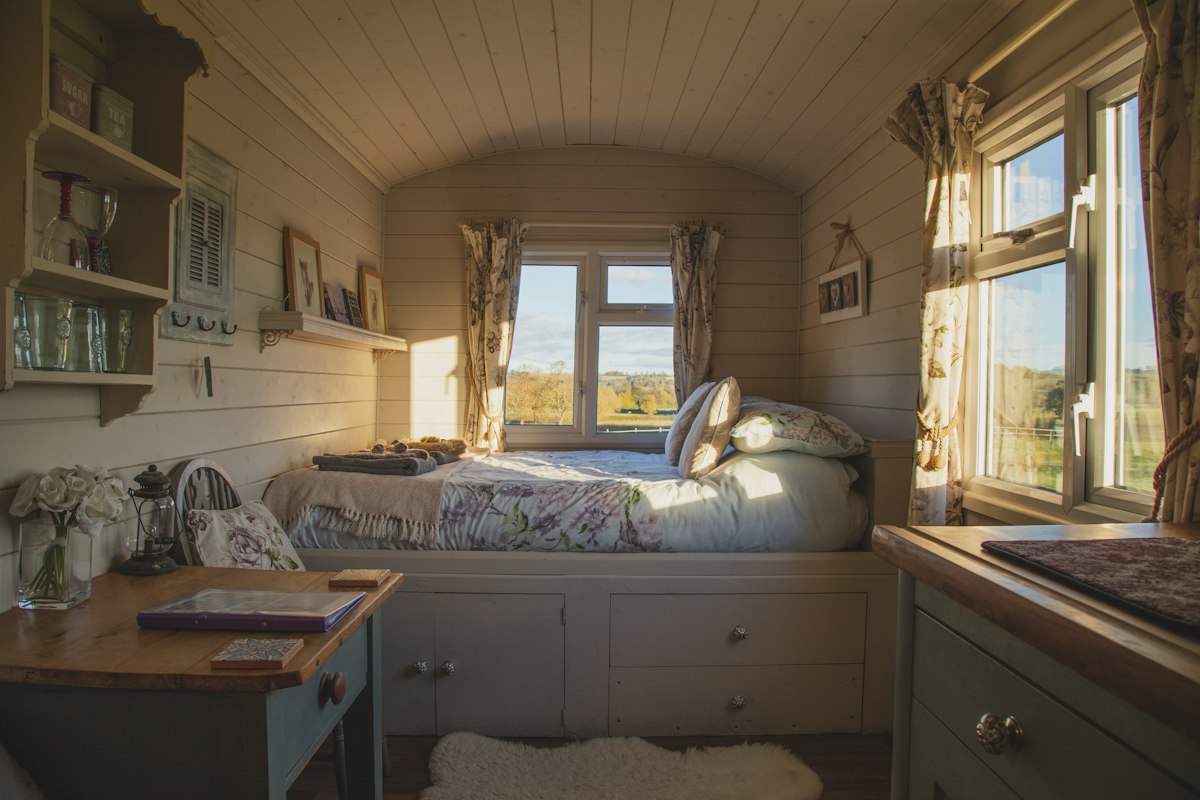
Check the window, available depth and the way the seat will affect circulation before designing a built in bench. A comfortable place to sit needs more than a shallow ledge. Consider how curtains, shutters or the window itself will operate around it.
Discuss construction, safe access and any heating or ventilation below the window with the installer. Do not enclose equipment or obstruct required airflow. If storage is included, confirm that lids or drawers can open without creating a hazard.
Measure the usable recess and the approach to it before deciding that a window seat will fit. The depth needed for comfortable sitting can project into the room more than expected. Include the cushion and any sloping back support in the outline. A bench that looks slim from the doorway may still reduce the route beside the bed.
Check how the window and its coverings operate around the proposed seat. Handles, inward opening sections and curtain fabric may need space that a drawing of the closed window does not show. Try the full movement and keep necessary access clear. Do not obstruct an opening that serves a required safety or ventilation function.
Discuss any radiator, vent or service below the window with the appropriate professional. A decorative enclosure can affect access and may be unsuitable for the equipment. The seat construction should be designed around verified requirements rather than assuming that a few small gaps will resolve them. Include inspection and maintenance access in the agreed detail.
Consider the intended use of the seat. A brief place to put on shoes needs a different level of support from a spot for reading for an hour. Check height, cushion firmness and back comfort with an actual trial where possible. Decorative pillows cannot reliably compensate for a bench whose basic proportions do not suit the activity.
If storage is included, choose an opening method that can be used safely in the available space. A lifting lid has different operating and support requirements from drawers, and stored contents add weight. Follow the hardware guidance and have the joiner confirm the complete arrangement. Avoid a design that requires loose cushions to balance awkwardly while a compartment is accessed.
Choose upholstery for the amount of sunlight and cleaning the location will receive. Read the care guidance for the actual fabric and any removable cover. Keep the cushion size manageable if it needs to be lifted regularly. A small stable surface nearby may be useful, but it should not crowd the approach or block curtain movement.
Compare the fitted proposal with a simple chair in the same part of the room. A chair may preserve more flexibility and avoid complicated window details. Choose the bench when its seating or storage benefit justifies the permanent work, rather than treating an attractive recess as a requirement to build.
Choose upholstery that suits sunlight and the intended cleaning routine. Keep the design proportionate to the room instead of forcing a seat into a narrow route. A simple chair nearby may serve the same purpose with greater flexibility.
Check dimensions against your room and follow furniture anchoring, textile care and electrical safety instructions. Use a competent installer for uncertain wall fixings and appropriately qualified help for permanent service changes.