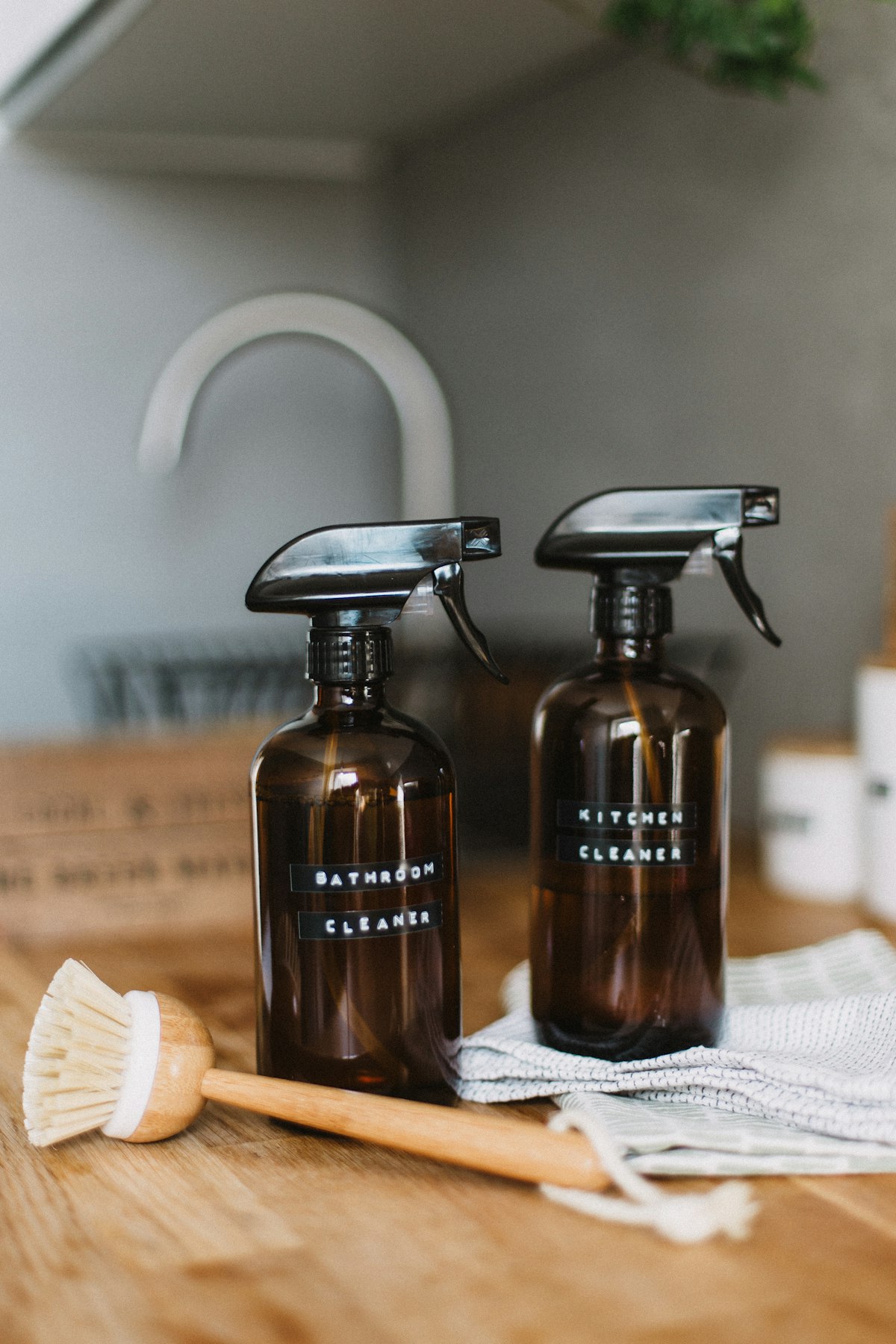
A renovated room often contains several surfaces that need different care. Identify paint, stone, metal, timber and grout before using one cleaner across everything. Read both the surface manufacturer guidance and the cleaning product label for compatibility.
Begin with approved gentle methods and protect adjacent finishes when a stronger treatment is specifically required. Never mix chemicals. Keep products labelled and stored according to instructions, with suitable ventilation during use.
Create a short home care note listing the method for each important surface. This is helpful if someone else cleans the room later. Consistent material specific care can prevent accidental damage that is difficult to reverse once a coating has been stripped.
Identify the actual finishes in the room before choosing a general cleaning routine. A kitchen may combine coated handles, painted cabinets, natural stone and grout within the same small area. Each can have different restrictions. Keep a simple record of the exact products so a cleaner is selected for the surface rather than for the name of the room.
Read the cleaner label alongside the surface care instructions. A claim that a product suits bathrooms or kitchens does not mean it is compatible with every material used there. Check any exclusions, required dilution and approved method for the exact task. If the two sets of instructions do not establish compatibility, ask the relevant supplier rather than experimenting on a prominent area.
Begin with the mild approved method and ordinary removal of spills. Stronger treatment is not automatically more effective and may change a coating before it removes a stubborn mark. Avoid abrasive pads unless the finish guidance permits them. Never mix cleaning chemicals, and follow the product instructions for ventilation, handling and storage.
Protect neighbouring surfaces when a specific treatment is required. A cleaner suitable for a tile may run onto a metal fixture or stone edge beside it. Apply only as directed and manage the area so the surrounding finishes are not accidentally exposed. Consider the complete junction rather than viewing one material in isolation from everything touching it.
Distinguish dirt from damage or a recurring building problem. Staining that returns around a joint, a loose coating or a persistently damp area may need assessment rather than more aggressive cleaning. Record what happens and ask an appropriate professional to investigate. A stronger bottle cannot restore an unstable substrate or correct water entering behind the visible surface.
Make the routine usable for everyone who helps maintain the home. A concise note can identify the approved method for each important finish and where the original instructions are stored. Keep products in their labelled containers and follow storage guidance. Unidentified decanted liquid is difficult to use correctly and can lose the information needed for safe handling.
Review the care note when a finish or cleaner changes. A replacement tap may have a different coating, or a new worktop may require another method even when its colour resembles the old one. Test a new approved approach in an inconspicuous place where recommended. Consistent informed care usually serves mixed material rooms better than occasional intensive treatment.
Always use the guidance for the exact product and finish in your home. Seek a qualified assessment before disturbing uncertain old materials, and do not treat general care advice as a substitute for diagnosing damage.