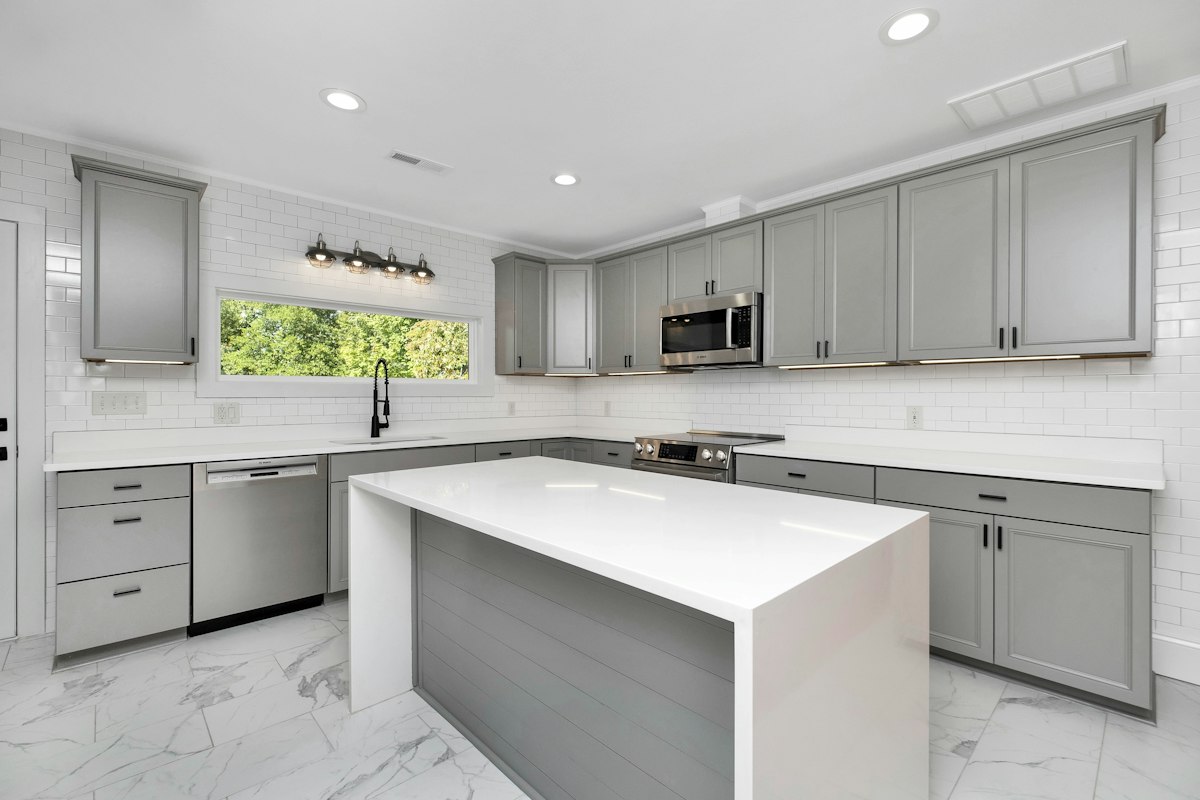
Follow the manufacturer instructions for the particular worktop and pay attention to joints and exposed edges. Use cutting boards and trivets rather than treating the decorative surface as a chopping or heatproof area. Promptly wipe standing water, especially around vulnerable junctions.
Choose cleaning products compatible with the finish and avoid abrasive methods unless expressly permitted. Inspect the seal around the sink and investigate any swelling or separation. A surface coating cannot restore a damaged underlying board.
Keep the product reference and installation details in your home file. Report leaks promptly so the worktop is not repeatedly exposed to moisture from below. Everyday habits can preserve a sound surface more effectively than trying to hide damage after it has developed.
Pay close attention to the parts of the installation where the decorative surface meets an edge, cutout or joint. These areas can have different vulnerabilities from the uninterrupted central surface. Keep the installation guidance and ask how the junctions should be maintained. A worktop that looks dry on top can still be affected by a leak from plumbing below.
Arrange small appliances so their normal heat, steam and vibration are handled as their instructions require. Do not assume that a protective mat makes any appliance suitable for any position. Check the guidance for the worktop and the equipment together. Leave practical access to wipe the surface and inspect the area behind items that remain in place.
Use a board for chopping and an appropriate trivet for hot cookware. Make these items easy to reach so protection becomes a normal part of cooking rather than an inconvenient extra step. Avoid setting down a pan briefly while searching for a mat. The momentary convenience can create a permanent mark that is much harder to address later.
Choose cleaning methods for the exact finish, including any texture or decorative coating. Test approved unfamiliar products discreetly when the supplier recommends it. More abrasive pressure can change the reflection of an area even if it appears to remove the original mark. Wipe residues as directed and avoid leaving moisture around vulnerable seams.
Inspect doors and panels beneath the sink when checking for leaks or swelling. An affected cabinet can help reveal where water has travelled even when the top looks sound. Ask a competent installer to assess movement or deterioration instead of covering it with a cosmetic patch. Correcting the source of exposure is more useful than repeatedly replacing the visible seal.
Keep the worktop reference, edge detail and fitting information with the home records. If damage occurs, ask the original supplier about realistic repair options and possible limitations in matching. Some marks may remain visible after a local repair. Clear expectations help you choose between living with minor wear, an appropriate repair and eventual replacement.
Always use the guidance for the exact product and finish in your home. Seek a qualified assessment before disturbing uncertain old materials, and do not treat general care advice as a substitute for diagnosing damage.