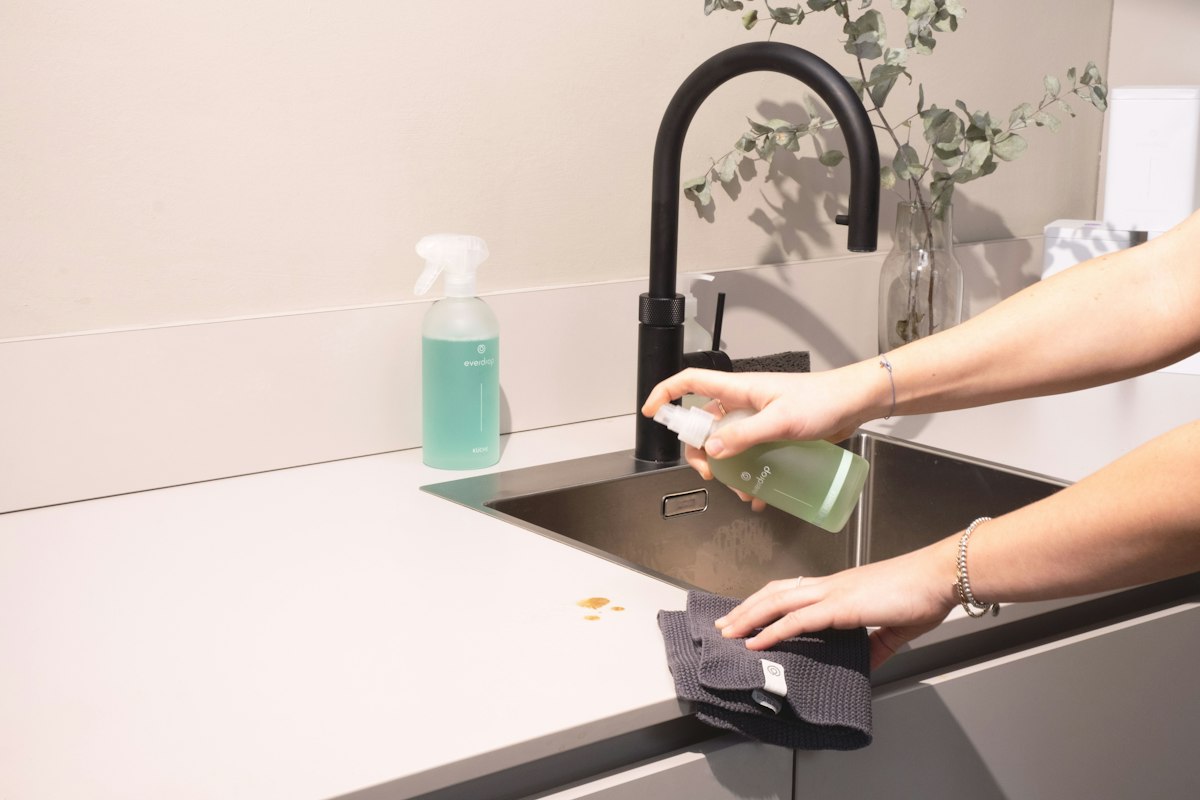
Look at the junction around the sink and nearby worktop during normal cleaning. Separation, movement or swelling deserves attention before more water reaches vulnerable areas. A neat visible surface is useful, but it does not prove the underlying connection is sound.
Ask a competent installer to assess recurring problems and confirm compatible repair materials. Follow product preparation and curing requirements. Applying a fresh bead over damaged or damp material can conceal the issue without resolving its cause.
Keep the area free of standing water and report plumbing leaks promptly. Save the sink and worktop installation information for future work. Routine inspection can help a small maintenance need be addressed before it damages surrounding cabinetry.
Inspect the sink area when it is clean and dry enough to see the junction clearly. Look along the rim, nearby worktop joints and the meeting point with the backsplash. Notice whether a visible gap is new or recurring rather than judging only the colour of the sealant. Photograph a concern so its location and any change can be explained to the installer.
Distinguish water left on top from moisture appearing below. A wet cabinet interior may involve a plumbing connection, the sink mounting detail or another source that a surface inspection cannot identify. Ask a competent professional to investigate recurring dampness. Do not assume that applying more sealant around the rim will resolve every leak associated with the sink.
Check retained cabinetry and the worktop edge for changes in condition. Swelling, a loose finish or a persistent musty smell deserves attention even when the visible joint still looks neat. Record when the problem appears, such as after ordinary washing or after a nearby appliance runs. This information can help the professional assess the cause without relying on guesswork.
Identify the worktop, sink and existing joint materials before arranging a repair. Natural stone, laminate and other surfaces can require different compatible products and preparation. Ask the installer to follow the relevant system guidance, including any necessary access from below. A product described broadly as suitable for kitchens is not proof that it suits the exact combination.
Allow the repair process to address failed material and underlying moisture as appropriate. A fresh cosmetic layer over an unsuitable or wet junction can obscure the concern without producing a dependable result. Follow the installer and manufacturer instructions for cure time and when normal washing may resume. Plan temporary arrangements rather than rushing the return to water exposure.
Keep cleaning methods compatible with every surface around the joint. A strong treatment chosen for staining can affect a nearby coating or metal finish. Wipe routine standing water promptly and investigate repeated pooling. The aim is to preserve a sound connection and identify changes early, not to make the visible bead look permanently new through increasingly harsh cleaning.
Keep the product references and photographs of the completed repair with the kitchen records. If the same location fails again, provide that history to the installer instead of treating it as an unrelated cosmetic task. Recurrence may call for reassessing movement, support or water entry within the complete installation rather than repeating the same surface treatment.
Always use the guidance for the exact product and finish in your home. Seek a qualified assessment before disturbing uncertain old materials, and do not treat general care advice as a substitute for diagnosing damage.