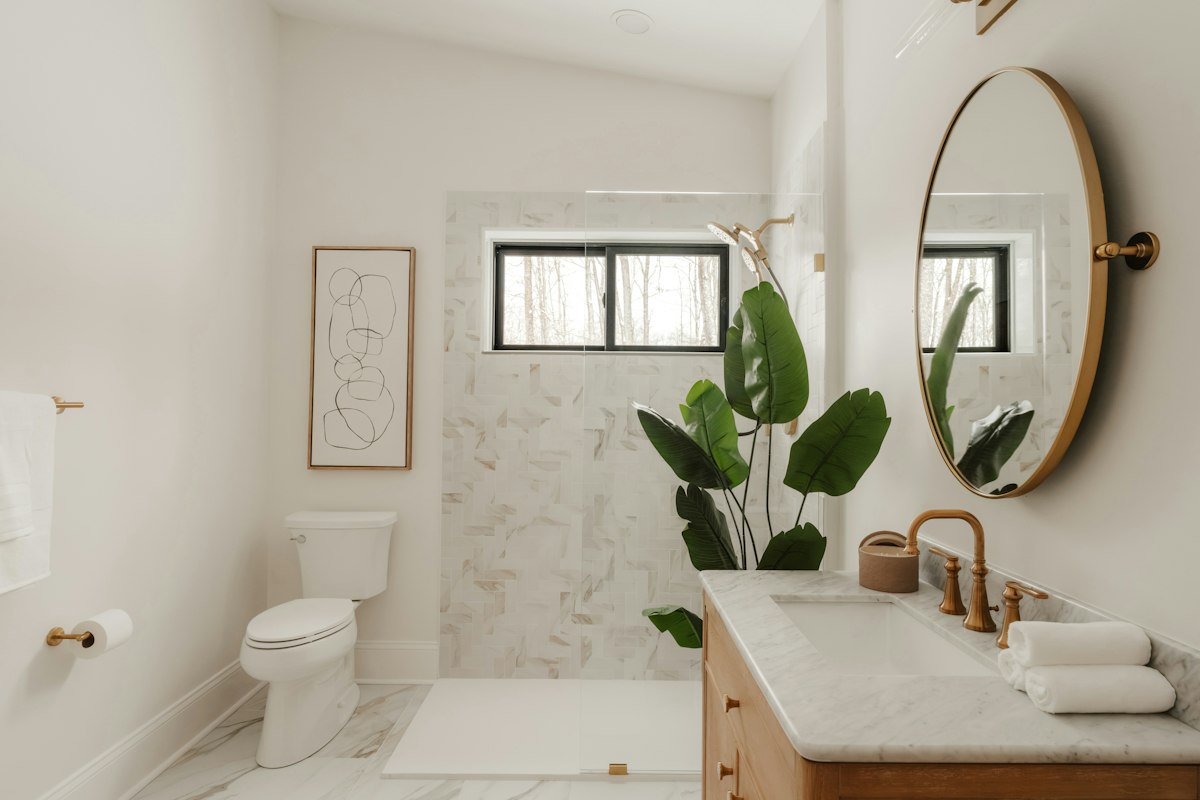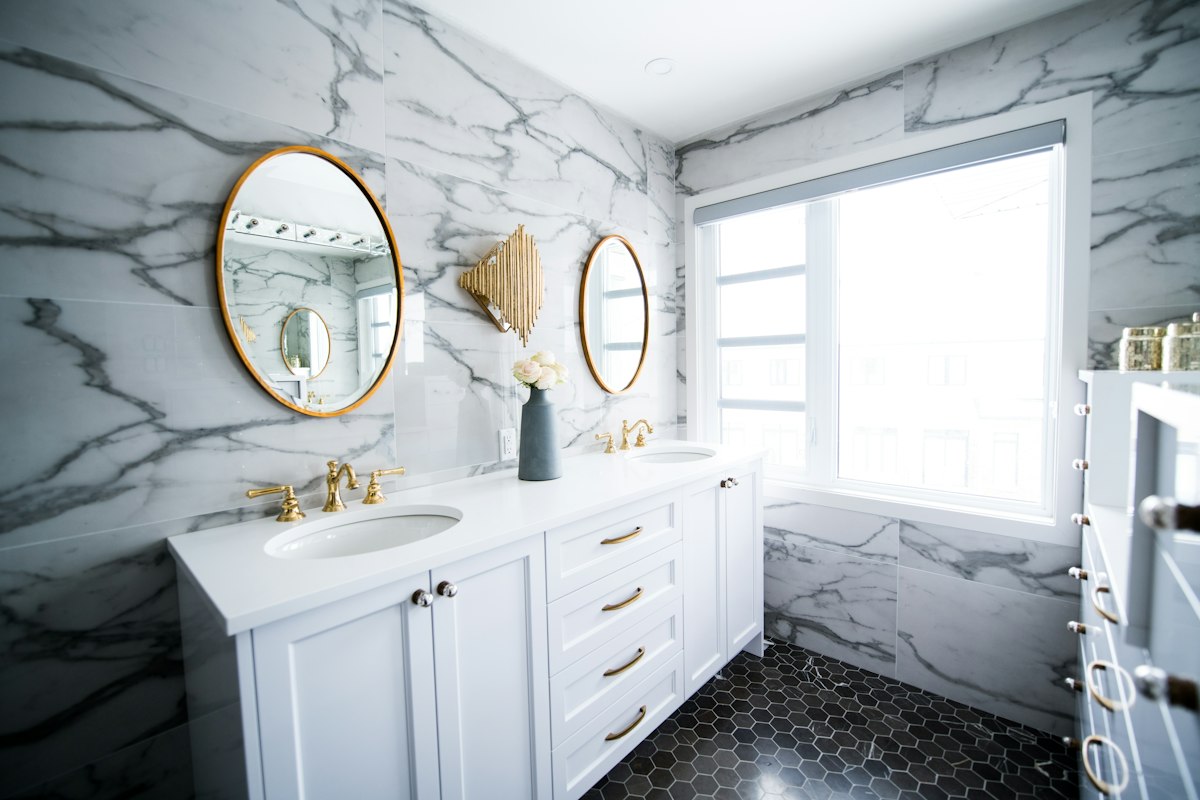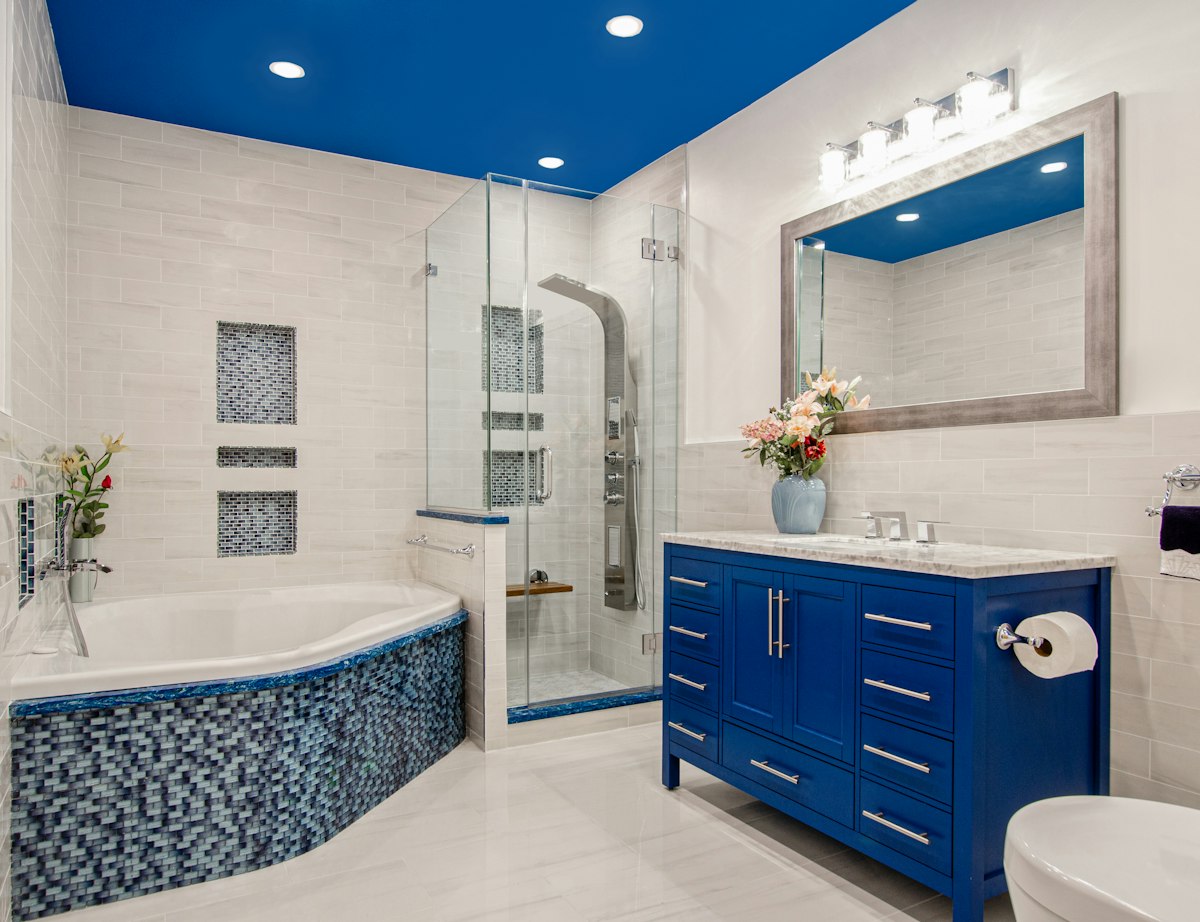
Use a combination of general light and illumination near the mirror. Light coming only from above can create strong facial shadows. Test the planned positions against the mirror, cabinet depth and the way the room will be used for grooming.
Choose fittings suitable for the bathroom location and have a qualified electrician assess the applicable zones and protection requirements. A decorative lamp that looks right in a photograph may not be appropriate near water or in a humid environment.
Consider separate switching for a softer evening setting and brighter task use. Compare colour appearance under the actual fittings before approving paint or tile. Good bathroom lighting helps people see clearly while keeping glare and awkward reflections under control.
Stand in front of the proposed mirror position and consider where shadows will fall on the face. A single bright fitting over the head can leave the eye area poorly lit even when the room seems bright overall. Illumination from suitable positions around the mirror may improve grooming tasks. The best arrangement depends on the mirror size, wall space and fittings available, so compare a complete proposal rather than choosing each lamp separately.
Look at the lighting from the doorway and from a seated position if the bathroom will be used that way. An exposed source may be comfortable for one person and glaring for another. Reflective tile, polished taps and a large mirror can multiply the effect. Ask to see the actual diffuser or fitting switched on when possible. Photographs of a fitting do not show how its brightness will feel when reflected across a small bathroom.
Coordinate colour appearance before approving finishes. Warm light can change how a white basin, pale grout and painted wall relate to one another. Mixing noticeably different light colours around the same mirror can make the room look unsettled. Compare the supplier information for the chosen fittings and assess samples under the planned light. Consistency usually matters more than selecting a fashionable lighting description without seeing the effect.
Consider how the room is used during a quiet evening as well as during a hurried morning. Separate controls may allow useful flexibility without requiring every source to be bright at once. Any dimming proposal needs compatible fittings and controls specified by the electrician. Discuss operation in plain language, including where switches can be reached. A complicated system is less helpful if nobody understands which control gives the light they need.
Ask how the fittings will be cleaned and serviced after installation. An integrated unit may have a different replacement process from a fitting with a replaceable lamp. Keep the model information and guidance about compatible components. Confirm the final positions with the electrician before work proceeds, allowing the professional to assess the location requirements. Good planning makes the room clearer to use and avoids buying decorative equipment that is unsuitable for its setting.
A bathroom must be assessed as a complete installation. Confirm product suitability, waterproofing, ventilation and applicable local requirements with qualified installers before beginning work or purchasing fitted components.