Measure the toiletries, towels and cleaning supplies you expect the vanity to hold. Check the space occupied by the basin and plumbing before judging storage from the outside. A wide cabinet can still have limited usable capacity if its internal layout is poorly matched to your needs.
Consider drawers that bring everyday items into view and shelves that accommodate taller bottles. Verify fixing requirements for a wall mounted unit with the installer. The wall construction must support the intended load rather than simply the empty cabinet weight.
Choose a finish approved for the bathroom environment and follow its care guidance. Wipe standing water promptly and maintain access to plumbing. Confirm the basin, tap and cabinet as a coordinated set before ordering so their dimensions and clearances agree.
Empty the current storage onto a suitable dry surface and separate daily items from occasional supplies. Note which bottles must stand upright, which tools need a safe dry home and how much towel storage is actually required. A catalogue photograph often shows only a few decorative objects. Your inventory gives a more realistic basis for deciding whether a drawer, cupboard or separate linen space will provide the most useful capacity.
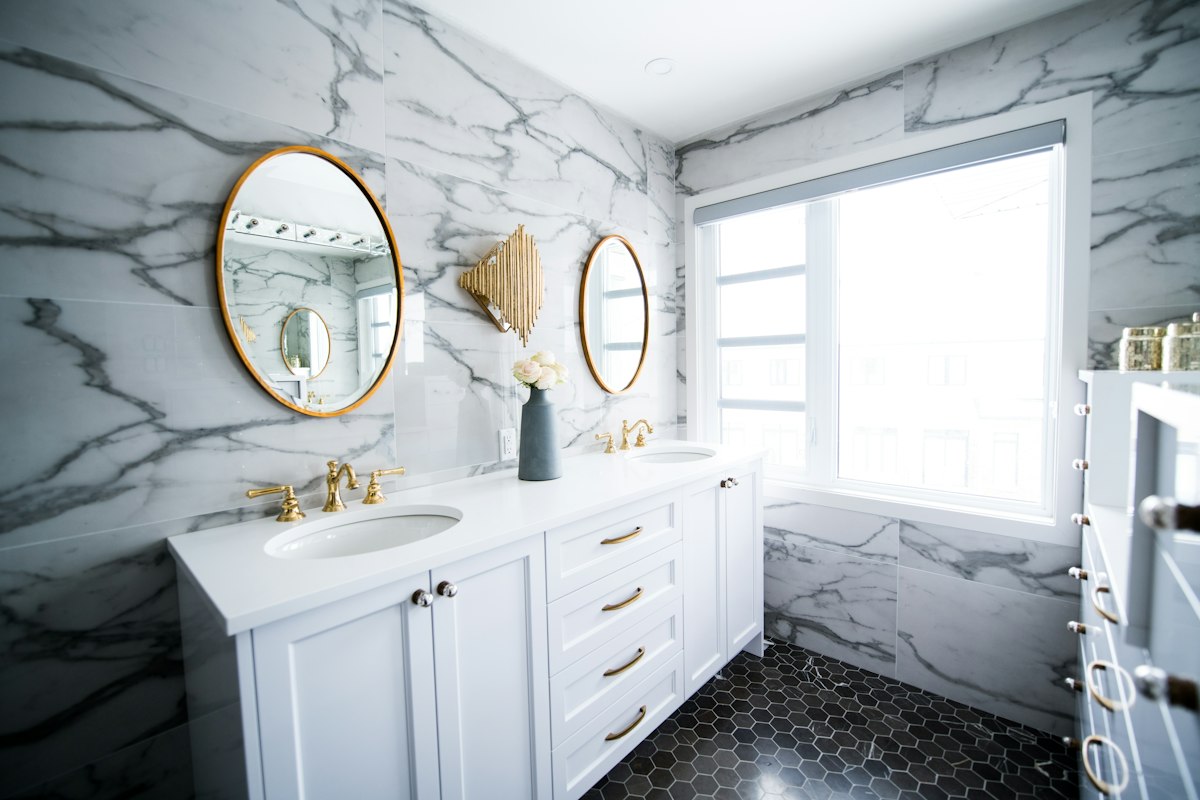
Look inside the proposed cabinet rather than judging its width alone. Plumbing cutouts can interrupt a drawer, and a deep shelf may make small items difficult to retrieve. Ask for internal dimensions and photographs of the exact configuration. Compare the usable space with a few representative belongings. If tall bottles fit only when laid down, a slightly different drawer arrangement may be more valuable than a larger external cabinet.
Think about the relationship between storage and cleaning. A floating vanity can leave visible floor beneath it, although the gap must be reachable if that is part of the cleaning plan. A floor standing unit may conceal the space but introduces its own junctions and edges. Neither arrangement is automatically easier. Choose the one whose surfaces can be maintained comfortably in the actual room, including beside the bath or toilet.
Test handles and drawer movement where a showroom example is available. Wet hands may make a very small pull awkward, while a projecting handle can catch clothing in a narrow route. A drawer should open without colliding with another fitting, and the user needs somewhere to stand while accessing it. Check these details on the room plan rather than assuming the cabinet will be used exactly as it is displayed in the showroom.
Before the order is finalized, confirm the basin opening, countertop, splash protection and tap arrangement with the supplier and installer. Ask how leaking connections can be reached without dismantling the entire cabinet. Keep the finish care instructions and replacement hardware references. Useful storage depends on the cabinet remaining serviceable, and that requires access and moisture management as well as an attractive frontage.
A bathroom must be assessed as a complete installation. Confirm product suitability, waterproofing, ventilation and applicable local requirements with qualified installers before beginning work or purchasing fitted components.