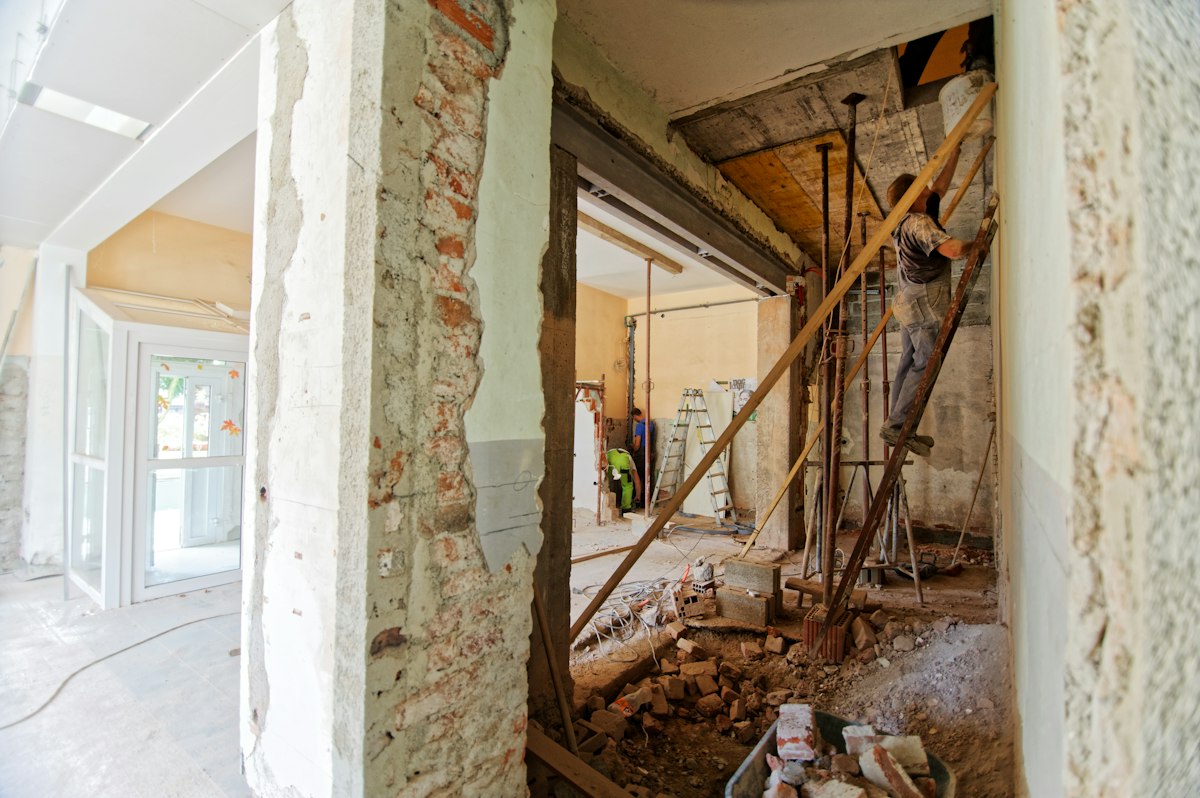
Identify the details that give the home its character before work begins. Original doors, cornices and floorboards can be damaged by routine access if nobody knows they are to remain. Photograph their condition and agree protection methods with the contractor.
Ask a suitable specialist about fragile finishes or historically significant material. Do not apply strong adhesive tapes directly to delicate surfaces. If an item must be removed, label its position and keep its fixings with it in a protected storage area.
Consider how new work will meet the retained feature. A small junction can determine whether the finished room feels considered or improvised. Confirm any heritage restrictions through the relevant local authority before changing protected fabric.
Document the condition and location of significant features before surrounding work begins. Close photographs of joints, profiles and existing damage can be useful alongside wider room views. Explain which elements are to remain visible and which may be moved temporarily. The contractor should not have to infer your preservation priorities from the age of an object or an unlabelled pile of removed trim.
Ask how protection will accommodate the work rather than merely covering everything once. A doorway may need repeated access, and a floor covering can collect grit beneath it. Adhesives that suit a modern coating may damage an older finish. Have a suitable specialist advise on fragile or unusual material, and agree a method that can be maintained through the relevant construction stages.
Plan the interface between original fabric and new components. Matching an old moulding exactly may require specialist work, while a simpler new detail might provide a more convincing contrast. Compare proportions and finish samples before the old piece becomes inaccessible. A successful junction should respect both the retained feature and the practical requirements of the new construction.
If removal is necessary, label the original position and keep related hardware together. Ask where the pieces will be stored and who is responsible for refitting them. A small part that looks replaceable may be difficult to match later. Confirm the expected condition after reinstatement so a retained item is not judged against the unrealistic appearance of a newly manufactured replica.
Investigate any protection or heritage requirements through the relevant local authority before altering significant fabric. Do not assume an internal feature is unrestricted simply because it cannot be seen from the street. Let professional findings influence the scope where condition or suitability is uncertain. Preservation is most effective when it is planned as part of the work rather than treated as a decorative preference after demolition.
Do not discard a damaged fragment of an original detail before a suitable specialist has considered it. It may provide a useful reference for matching profile or finish. Store it safely and identify its location so an apparently minor piece does not become an unexplained object in a contractor waste pile.
Use these ideas to prepare a brief for your own property. Confirm measurements on site and ask appropriately qualified local professionals about approvals, technical design and work that requires specialist competence.