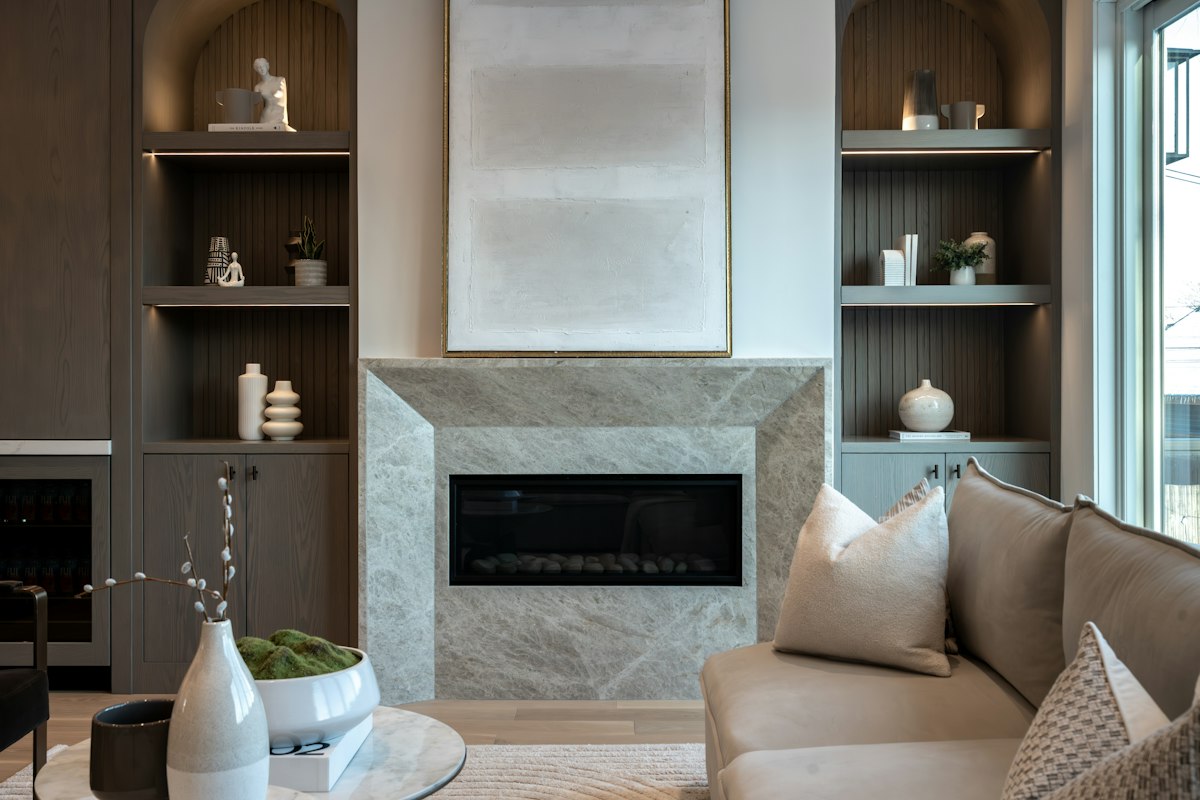
Begin with the books and objects you genuinely want to keep accessible. Group items by size or use and leave space to remove them easily. Shelves become harder to live with when every surface is filled for the sake of a finished photograph.
Check the shelf and fixing capacity before adding heavy books or ceramics. Keep weight distributed as the manufacturer directs. Anchor tall furniture appropriately for the wall and household circumstances, using competent help where the fixing detail is uncertain.
Repeat a few colours or materials to create continuity without buying an entire matching collection. Place frequently used objects at comfortable reach. An edited shelf should remain useful between cleanups rather than becoming a permanent arrangement nobody wants to touch.
Sort the contents before deciding on a display arrangement. Books that are read often need straightforward access, while fragile objects may need a more protected position. Remove packaging, obsolete papers and items kept only to fill gaps. This gives the shelves a practical purpose before styling begins. A useful collection usually creates more character than a coordinated purchase of objects chosen to occupy every empty section of a unit without any connection to the household.
Work with a few substantial groups instead of scattering one object into every space. Related books or a small cluster of useful ceramics can make the shelf easier to read. Leave enough room to lift an item without rearranging everything beside it. A display that depends on very precise placement may be frustrating once the room is used. The shelves should tolerate ordinary borrowing, cleaning and returning of objects rather than function only as a permanent still life.
Consider the shelf structure and the manufacturer's capacity information. A collection of large books can be heavy even when the arrangement looks visually light. Keep loads within the specified limits and use appropriate anchoring for the furniture and wall. Do not rely on decorative symmetry to determine where heavy objects belong. A useful storage plan respects the construction of the unit as well as the appearance of the books and accessories placed on it.
Connect the shelves with the room through a limited set of materials or colours. This may happen naturally through book covers, timber or objects already owned. It does not require every shelf to repeat the same formula. Compare the overall view from the sofa and doorway, then simplify any area that feels restless. A few open sections can provide a visual pause and make the meaningful objects easier to notice without buying additional decoration.
Plan for cleaning and changing interests. A complicated arrangement of tiny pieces can create a task that discourages ordinary maintenance. Keep frequently handled objects within comfortable reach and allow some flexibility as the collection grows. Review the shelves after a period of normal use. If an object always ends up elsewhere or a stack is difficult to remove, adjust its place. Well styled storage continues to work when the room is lived in, not only immediately after being arranged.
Measure your own room and check furniture, fixing and care instructions before buying. Have heavy wall mounted items and permanent electrical changes assessed by competent professionals where the installation requires it.