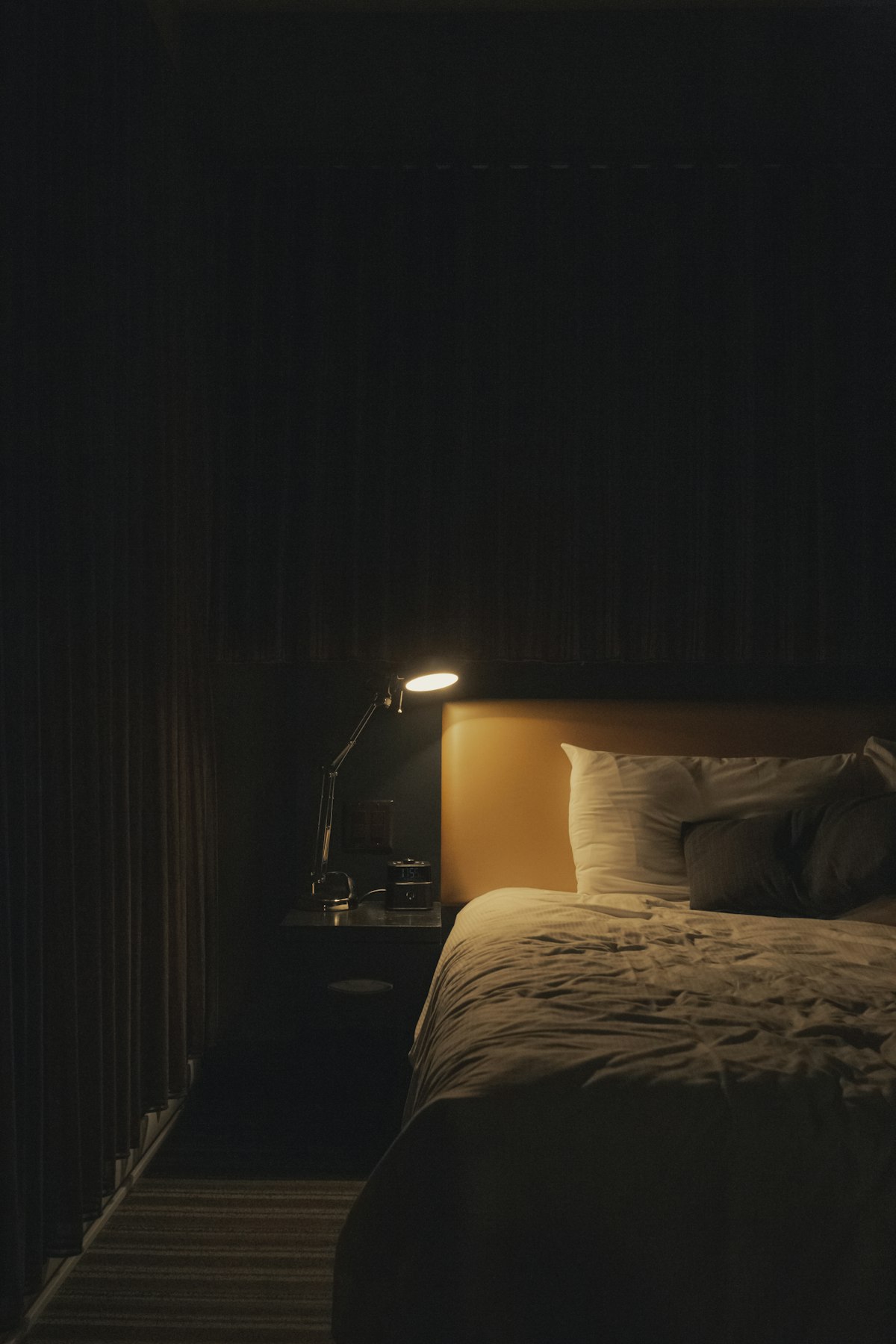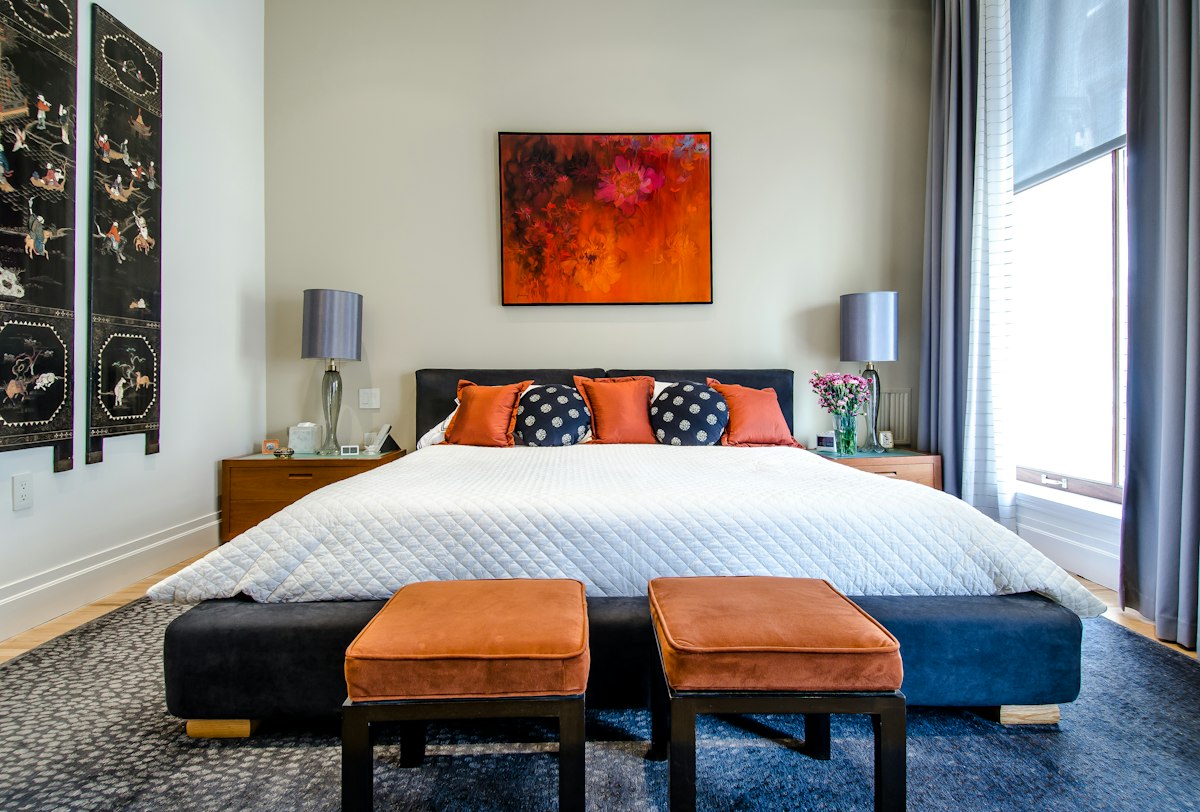
Choose one main patterned element, such as curtains or bedding, and let nearby large surfaces provide calm. Related colours can connect a smaller secondary pattern without making everything identical. Compare the scale of the motifs as well as their colours.
Lay samples together in the room and view them from the doorway. A pattern that feels delicate at close range may read very differently across a large bed or wall. Give the strongest choice enough space to make its effect clearly.
Select a lead pattern according to the part of the room you want to notice first. A broad printed curtain and a patterned duvet cover each occupy a large visual area. Decide which will be stronger before combining them. Their colours may relate without matching, but equal emphasis across every textile can make the room feel unnecessarily active.
Compare pattern scale from the doorway rather than only at arm length. A small motif can merge into a general texture across the room, while a large repeat may become the dominant feature. Open a sample far enough to see several repeats where possible. A small folded corner does not reveal how the design will work on a full curtain or bed.
Use plain surfaces to separate patterns that otherwise compete. A quiet wall, simple headboard or single coloured throw can give each patterned element room to make sense. The pause does not have to be white. Choose a background tone already present in the textile so the room retains a connected palette.
Consider the relationship between pattern and texture. A strongly woven plain fabric can contribute substantial visual interest even without a printed motif. Adding another busy design beside it may be unnecessary. View the samples under the lamps used at night because directional light can make texture much more prominent than it appears in a shop.
Try reversible changes first when the combination is uncertain. Bedding and cushion covers are usually easier to adjust than a large upholstered headboard or fitted wall finish. Check dimensions and care labels before purchase. The trial should be practical enough to use normally rather than an arrangement that only works when carefully laid out for a photograph.
Keep the furniture silhouettes and small accessories relatively restrained if the textiles provide the main character. Several ornate shapes can create additional competition around an already active bed. Remove one element before adding another when the room feels crowded. A clearer relationship between a few choices is often more convincing than a large coordinated collection.
View the scheme after curtains are closed and the bed is made in its ordinary way. Patterns can appear very different when folded, gathered or partly covered. Judge the combination in those real positions rather than relying only on neatly spread samples on a table.
Keep furniture shapes and accessories relatively restrained if the textiles are active. Try reversible fabric changes before committing to a permanent wall finish. A balanced pattern scheme supports the room rather than becoming its only noticeable feature.
Check dimensions against your room and follow furniture anchoring, textile care and electrical safety instructions. Use a competent installer for uncertain wall fixings and appropriately qualified help for permanent service changes.