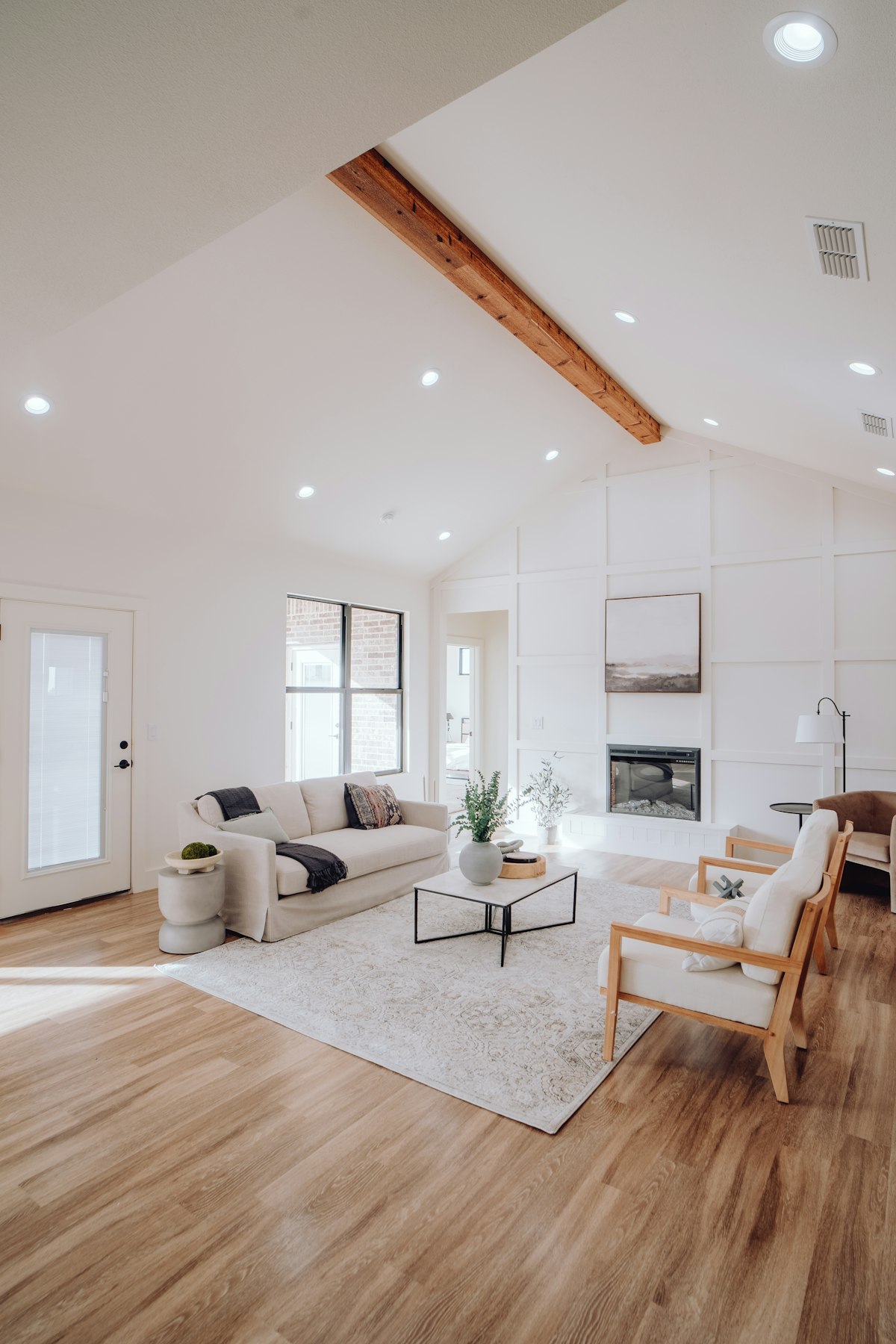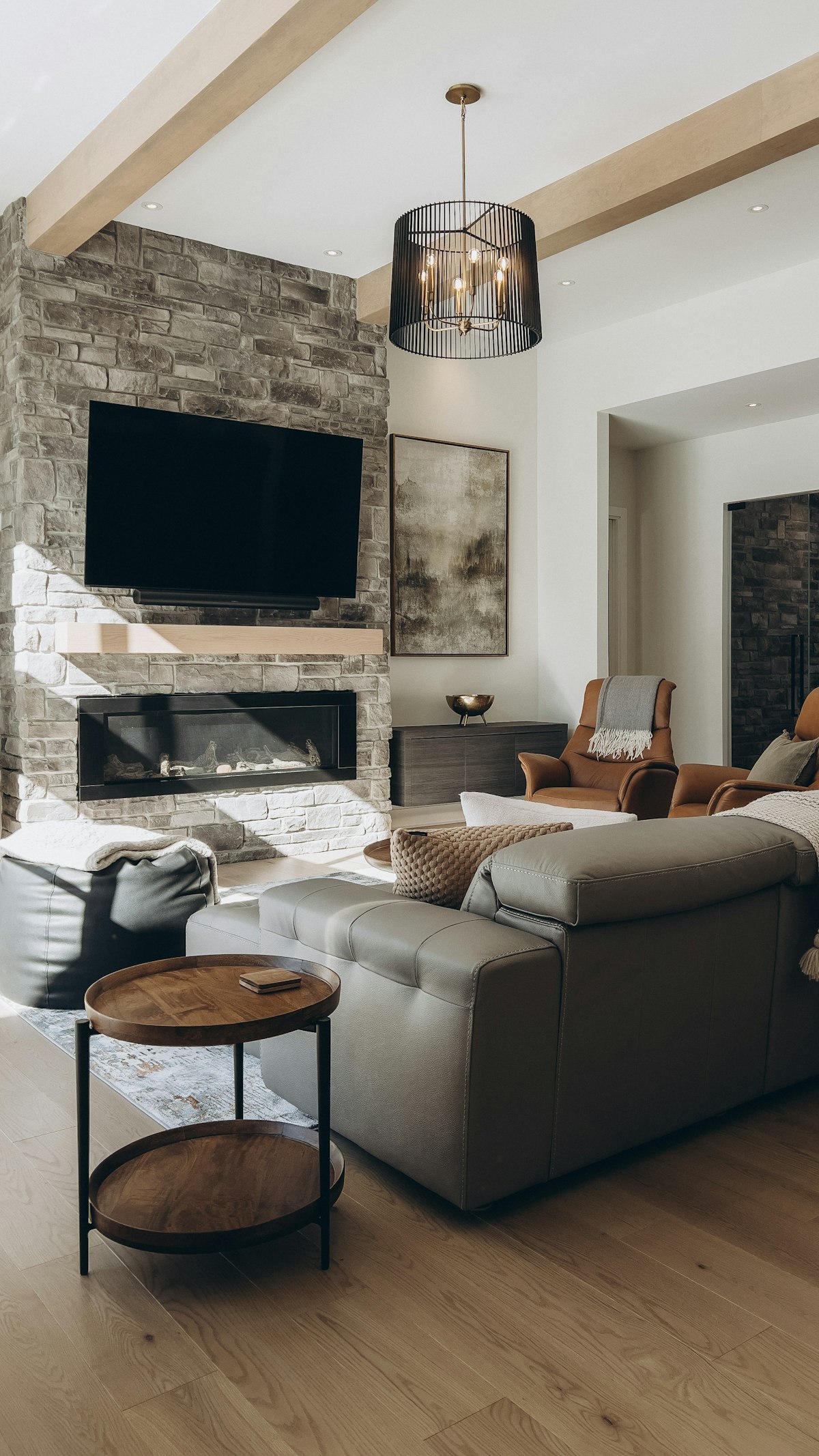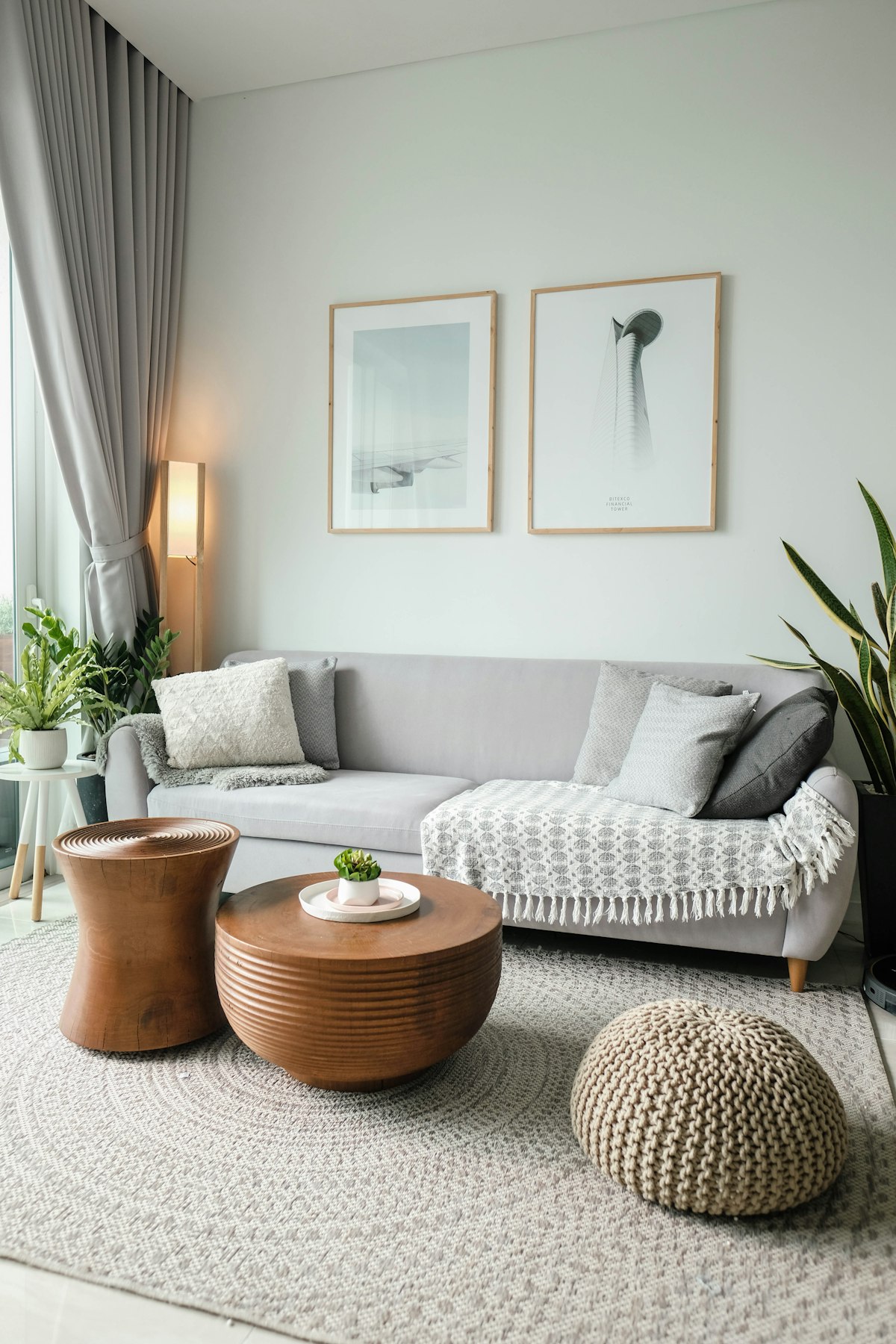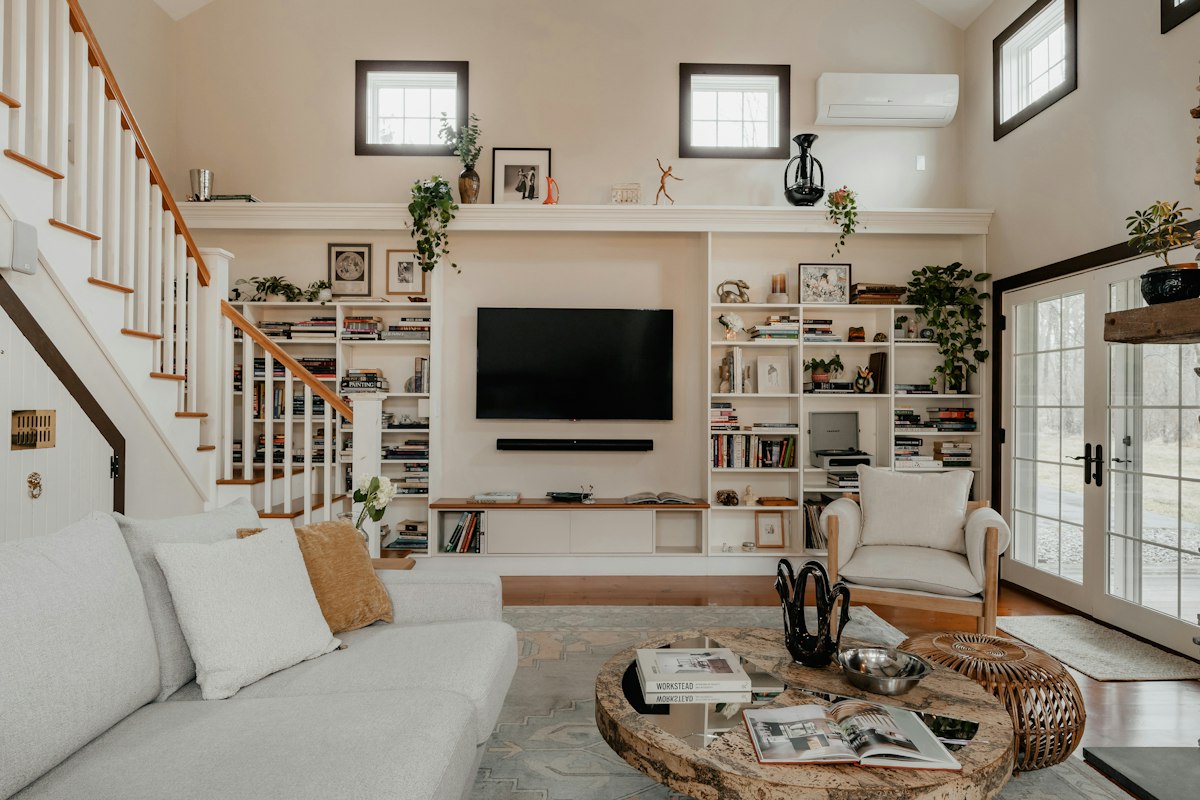
Divide the room into useful activities rather than spreading one seating group across the entire floor. A main conversation area, reading spot or small work surface can give the space structure. Keep clear routes between them and around the room edges.
Use rugs and lighting to establish each area without adding unnecessary partitions. Furniture can sit away from walls when the proportions allow it. Check power access before placing lamps in the middle of a large room.
Repeat materials or colours so the separate areas feel connected. Leave some open space as part of the design rather than treating it as unfinished. A large room becomes comfortable through well scaled relationships, not through the greatest possible amount of furniture.
Identify the activities that genuinely belong in the room before dividing it. A large space may support conversation, reading or a modest work area, but each should answer a real household need. Do not introduce a second seating group merely because there is floor available for it. A clear purpose gives each zone a useful scale. Without that decision, furniture can become scattered across the perimeter while the room still feels empty and difficult to use.
Build the main seating group at a comfortable size rather than stretching it to reach every wall. People should be able to converse and use tables without the distances becoming awkward. Mark the group and test its relationship to entrances and windows. Leave circulation around it where practical. A generous room allows furniture to sit away from walls, but that freedom still needs attention to the paths people follow and the views they enjoy from their seats.
Use rugs and lighting to support the activities rather than treat them as separate decoration. A rug can connect one seating group, while a reading lamp gives another area a clear role. Compare the scale of each element with its zone instead of buying oversized products simply because the whole room is large. Consider the view across the zones too. They should feel related without needing identical layouts or the same amount of furniture in each area.
Resolve power access before settling on a central lamp or work surface. A visually convincing arrangement can be impractical if it depends on leads crossing open walking space. Review alternatives and have any permanent electrical changes assessed by a qualified professional. Keep equipment access and cleaning manageable. Large rooms often make these service relationships more visible because furniture is farther from the perimeter, so they deserve attention early rather than a last minute decorative cover.
Leave intentional open space after the useful zones are established. It can support flexible movement, daylight and the proportions of the room without needing another cabinet or chair. Repeat a limited number of materials or colours to connect distant areas and then review the space during normal use. If one zone remains empty, reconsider its function instead of automatically buying more objects for it. A large room becomes welcoming through clear relationships and comfortable activity, not through complete occupation of the floor.
Measure your own room and check furniture, fixing and care instructions before buying. Have heavy wall mounted items and permanent electrical changes assessed by competent professionals where the installation requires it.