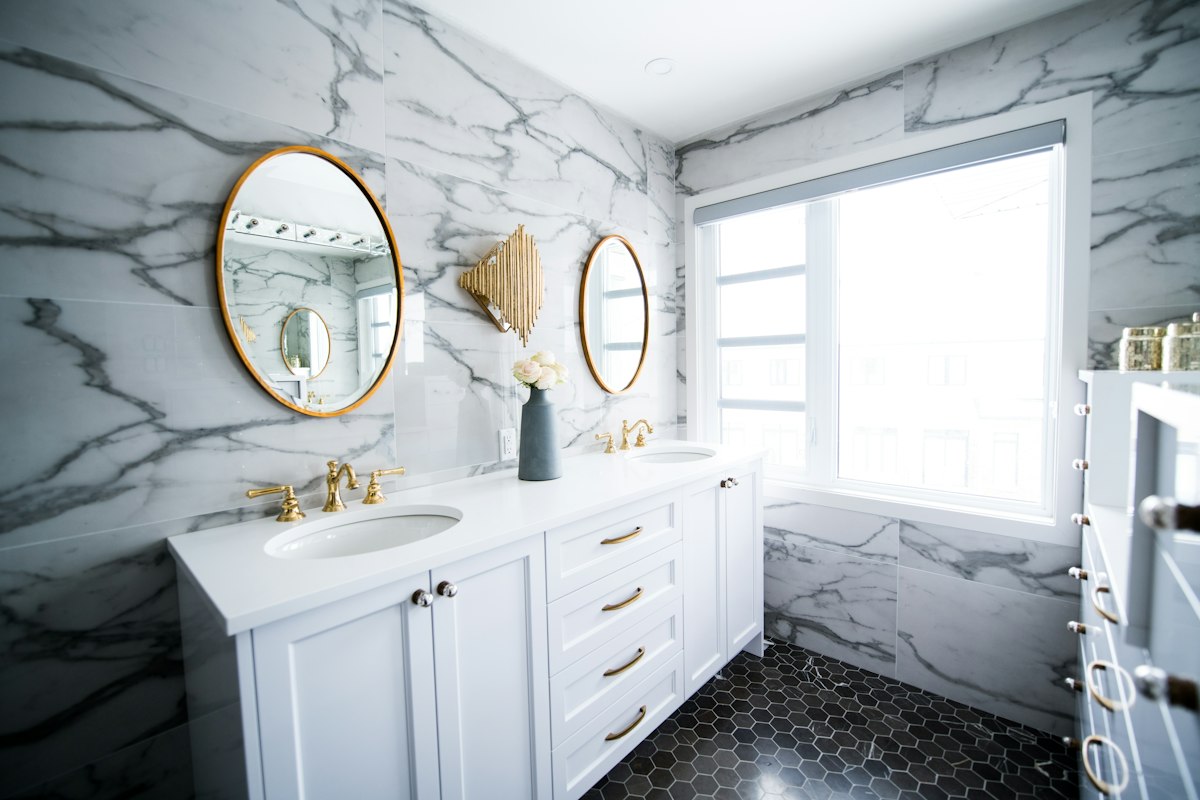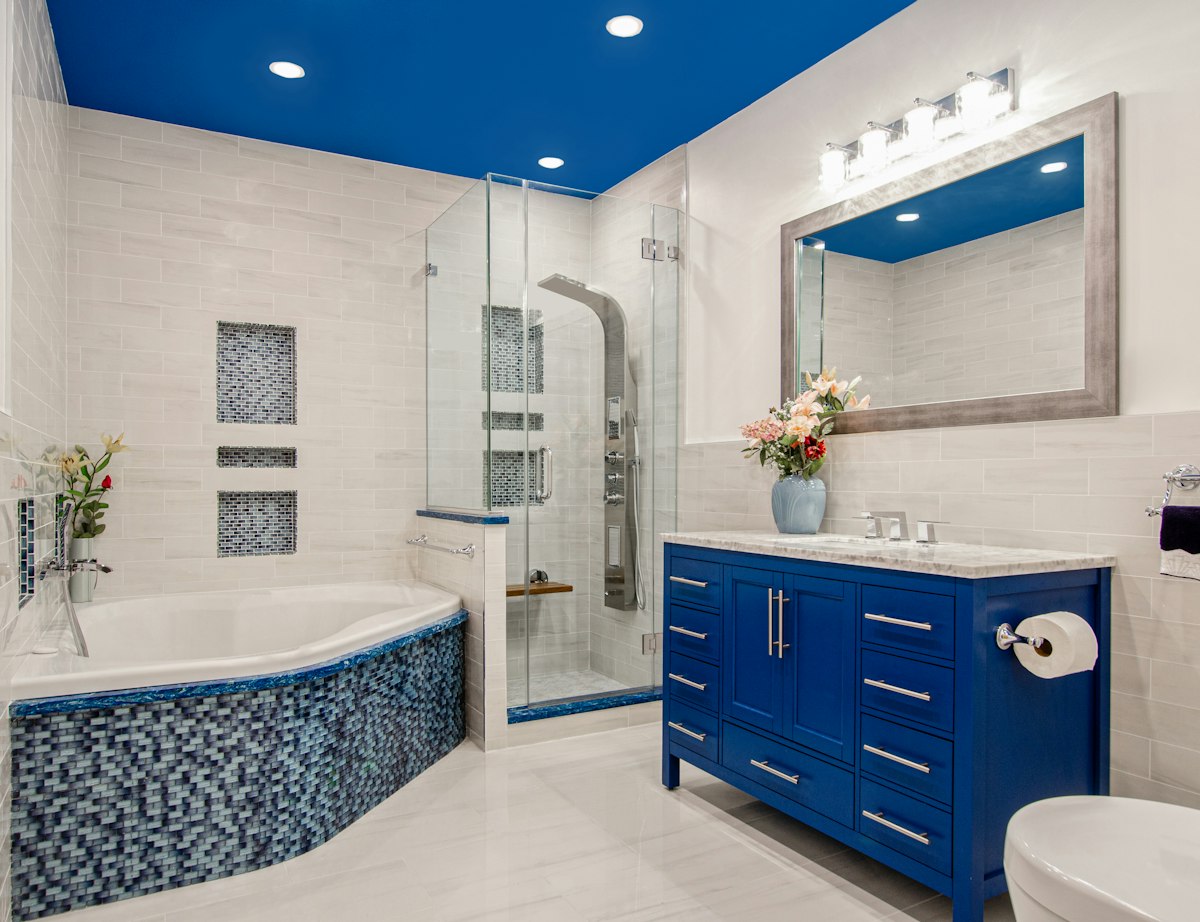
Set the mirror size in relation to the vanity, lighting and people who use the room. A large mirror can broaden the view, but it should not interfere with taps or storage. Check its height from a standing position rather than copying a display installation.
If considering a mirrored cabinet, measure the projection and door swing. Confirm suitable fixing and electrical requirements for any illuminated or heated model. Have a qualified electrician handle equipment that requires a connection to the electrical installation.
Position lighting to limit glare and distracting reflections. Follow the mirror care instructions, especially around edges and coatings. A simple shape often works well when the tile or vanity already provides the main visual character.
Choose the mirror position using the range of people who will use it. A top edge that looks balanced above the vanity may leave a shorter person looking at only part of their face. Likewise, a very low bottom edge can conflict with the tap or splash area. Try a paper outline and assess it from normal standing or seated positions. The drawing should reflect actual sightlines rather than an assumed average user who does not live in the home.
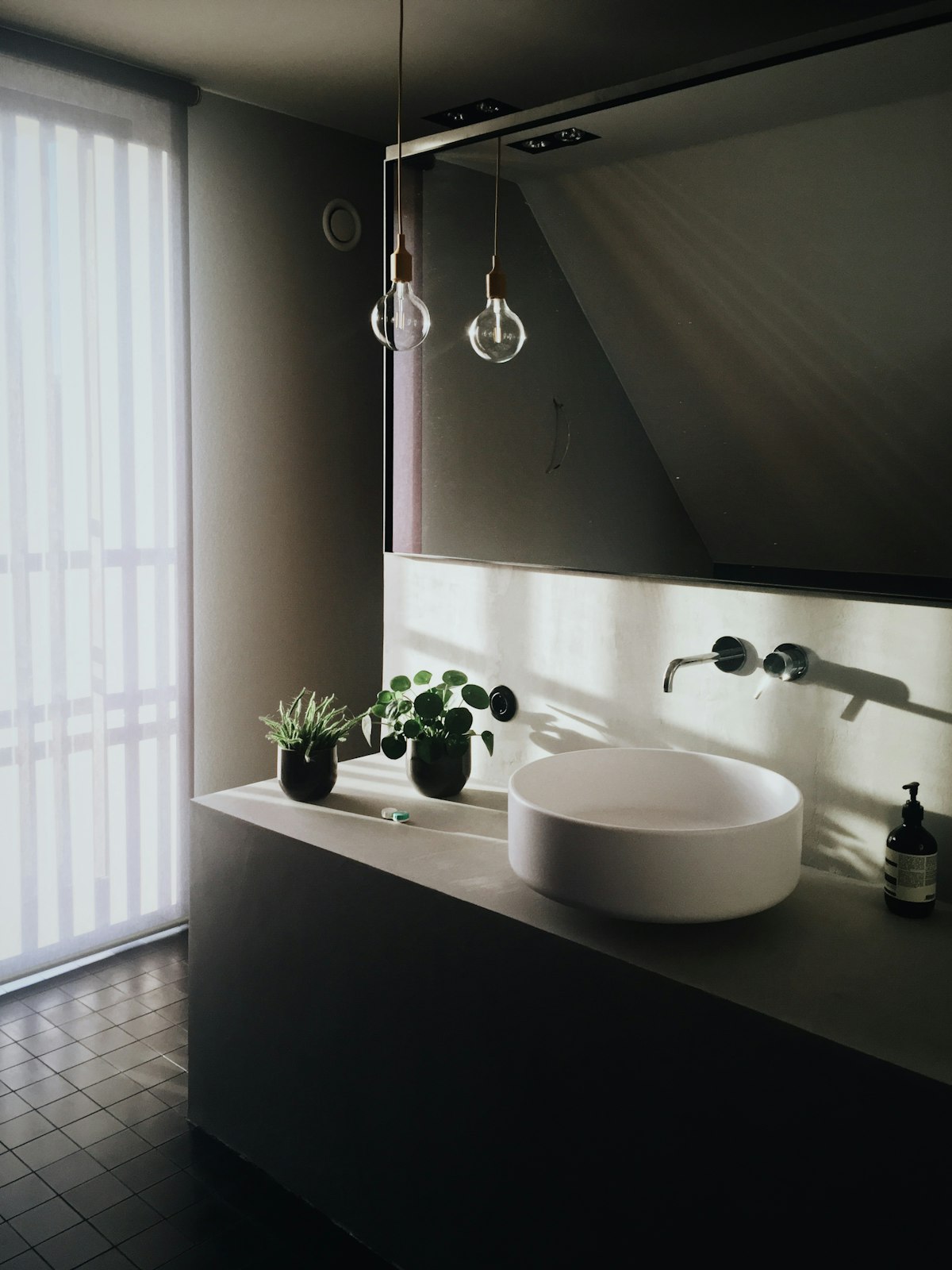
Consider the mirror together with the wall around it. Nearby windows, sloping ceilings and lights can influence which proportions feel comfortable. A mirror the full width of the cabinet can look calm in one room, while a smaller shape with clear wall space may suit another. Avoid choosing size from a fixed decorative formula. Look at how the mirror relates to the basin centre, the tap position and the available space for useful illumination.
A mirrored cabinet adds storage but also introduces depth. Check the side view, the reach to its contents and the arc of an open door. A cabinet that projects far over a shallow basin may feel intrusive even if the front elevation looks attractive. Ask for exact internal dimensions if storage is part of the reason for choosing it. The cabinet should hold useful belongings without forcing the user to lean around its edge during washing.
Review reflections before committing to the position. A mirror can direct a bright lamp or an unattractive view back toward the user. Shiny wall tiles may add further reflections that are difficult to predict from a small sample. Consider the room with its normal lighting switched on and discuss the arrangement with the lighting installer. The aim is clear, comfortable use rather than the largest possible reflective area in the available space.
For an illuminated or heated product, confirm the location suitability and connection requirements before purchase. Ask how any integrated components can be serviced and keep the model details. For all mirrors, follow the manufacturer instructions for mounting and cleaning, including care around the edges. A well chosen mirror remains useful when its proportions, storage function, lighting relationship and maintenance requirements have all been considered together.
A bathroom must be assessed as a complete installation. Confirm product suitability, waterproofing, ventilation and applicable local requirements with qualified installers before beginning work or purchasing fitted components.