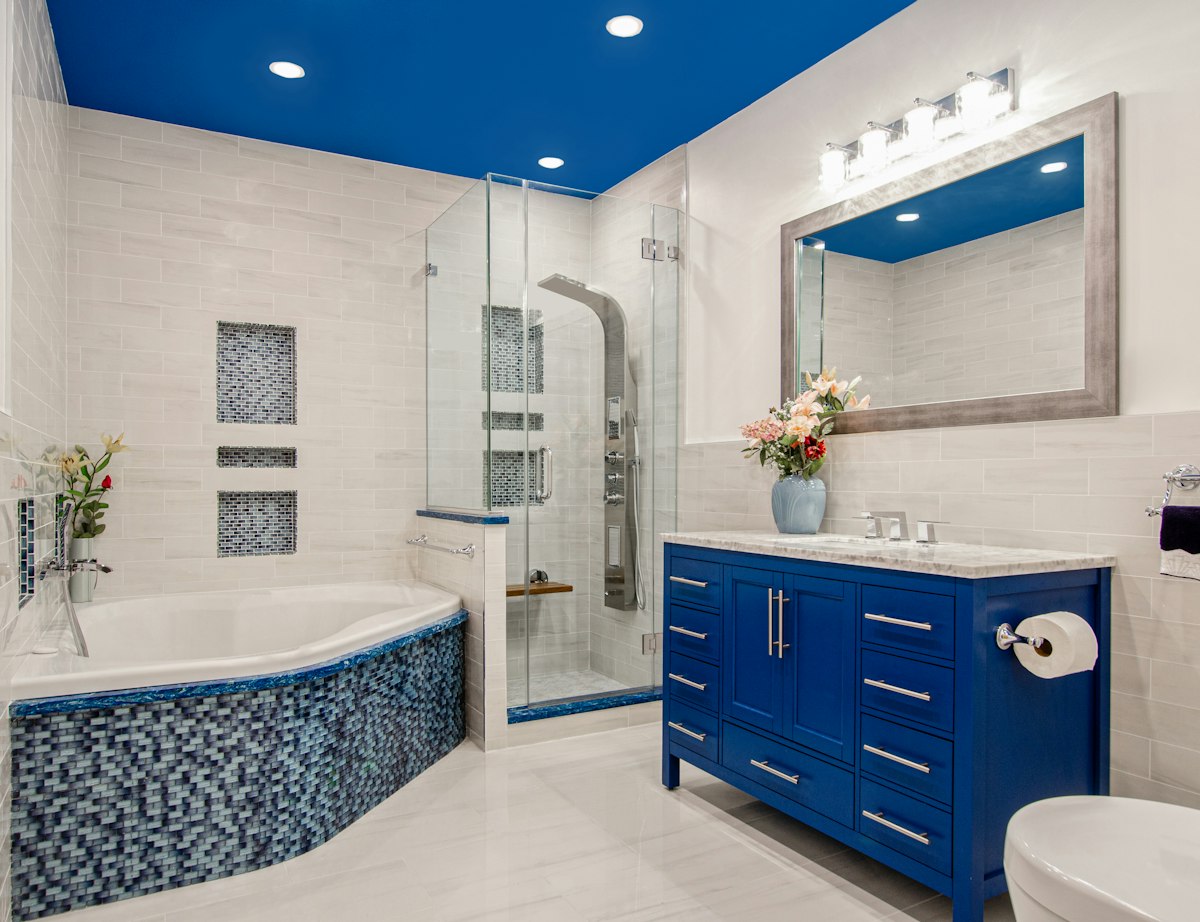
Look at how the screen opens, where water will fall and how the glass can be cleaned on both sides. A minimal panel may look spacious but allow more splashing in some layouts. Discuss containment with the installer using the actual shower position.
Compare hinges, seals and the availability of replacement parts. Check how doors interact with nearby fixtures and whether a towel rail will obstruct them. Follow the manufacturer guidance for dimensions and installation rather than choosing from appearance alone.
Use cleaning products approved for the glass, coating and hardware. Keep drainage paths and seals in good condition. The best screen for your room balances access, water control and everyday maintenance without making a small space difficult to navigate.
Compare the opening types with the entire bathroom arrangement. A hinged door needs a clear arc, while a sliding screen uses tracks and overlapping panels that may affect cleaning access. A fixed panel leaves a permanent opening that must be considered alongside the shower position. There is no universally best type. Ask which arrangement manages water and movement sensibly in your room rather than choosing the thinnest frame in a photograph.
Think about the person cleaning the enclosure. Can they reach the far side of the glass, the bottom edge and the wall junction without leaning over an obstacle? Decorative simplicity does not always mean fewer maintenance difficulties. Look closely at the proposed hardware and ask which parts can be removed or replaced as intended by the manufacturer. A readily serviceable seal can matter more over time than a barely visible difference in frame colour.
Discuss splash patterns using the actual shower head and controls. The direction of water, the size of the enclosure and the way people move while washing all influence containment. An open panel that works in a large display may allow water onto nearby furniture in a smaller room. Ask the installer to explain the practical limits of the chosen screen. Avoid treating a decorative bath mat as the solution to a poorly contained shower.
Check the edge relationships with towel rails, taps and cupboard doors. A screen handle that projects into a route may be uncomfortable even if the glass itself fits. The installer should confirm measurements at the appropriate stage because finished surfaces can differ from early drawings. Do not order a rigid glass component using an approximate room dimension. Clarify who takes final measurements and who is responsible for confirming product compatibility.
Choose a realistic care routine before paying extra for a surface treatment. Coatings may reduce certain deposits, but they still have specific cleaning requirements and do not remove the need for ordinary care. Avoid abrasive tools or improvised chemicals unless approved for every affected component. Keep the instructions and spare part details. The easiest screen to live with is one whose design, access and maintenance expectations all fit the household.
A bathroom must be assessed as a complete installation. Confirm product suitability, waterproofing, ventilation and applicable local requirements with qualified installers before beginning work or purchasing fitted components.