Store clean towels away from routine splashes and give used towels enough room to spread out. A tight stack of hooks may suit occasional guests but can leave everyday towels crowded. Consider the household size before choosing the number and position of rails.
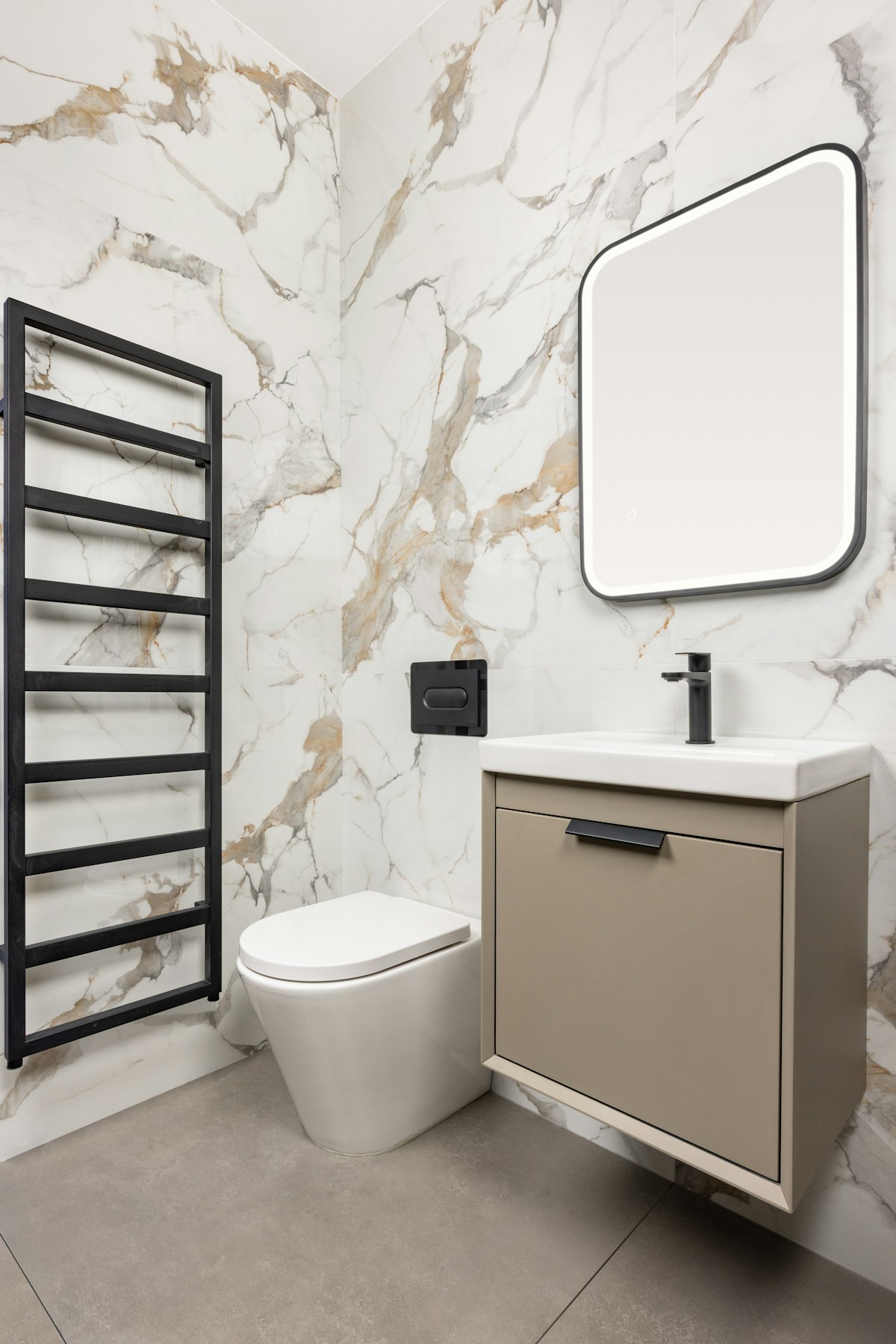
Keep towel storage within a comfortable reach without obstructing doors or controls. Heated equipment must be suitable for its location and installed by the appropriate professional. Follow the product guidance rather than assuming any decorative rail can serve as a heater.
Allow ventilation around damp textiles and wash them according to their care labels. Keep spare towels in a dry cupboard if the bathroom remains humid. Practical drying space can make a small room easier to maintain without adding bulky storage.
Count towels in use rather than towels owned. A household may need space for several damp bath towels at the same time, even if clean spares are stored elsewhere. Imagine the room after the busiest shower period and notice whether the proposed rail allows each towel to spread. A row of decorative hooks can hold a lot of textiles but may crowd them into one humid area. Plan around drying behaviour as well as the number of hanging points.
Locate the everyday towel where it can be reached comfortably from the relevant activity. A hand towel beside the basin has a different role from a bath towel needed after showering. Check that neither position obstructs a screen handle, cupboard door or switch. Avoid forcing a user to cross a wet floor to reach a towel. Convenient placement can reduce scattered textiles because the intended place is also the easiest one to use.
Choose the style of support according to the textiles and users. A rail can let a towel open more fully, while a hook may be simpler for someone who finds folding awkward. The household may benefit from both in different locations. Confirm the load and fixing requirements for the exact products. A rail intended only for towels must not be treated as a support fitting, even if it looks substantial or feels firmly mounted during ordinary use.
Keep dry spare storage separate from drying storage in the plan. Closed cupboards can protect clean towels from splashes, but placing damp towels inside them can create an unpleasant storage environment. Consider whether a nearby bedroom or hallway cupboard offers a better home for reserves. A bathroom with limited wall space can work well when it only holds the towels currently needed, rather than carrying the entire household linen collection.
If heating is part of the proposal, discuss the equipment and its installation with the appropriate professional. Ask how controls work, how the unit is cleaned and what textiles can be placed on it according to the manufacturer. Keep the operating information accessible. After the bathroom is in use, review whether towels are actually drying between uses. A practical arrangement may need adjustment even when the metalwork looks balanced in the finished room.
A bathroom must be assessed as a complete installation. Confirm product suitability, waterproofing, ventilation and applicable local requirements with qualified installers before beginning work or purchasing fitted components.