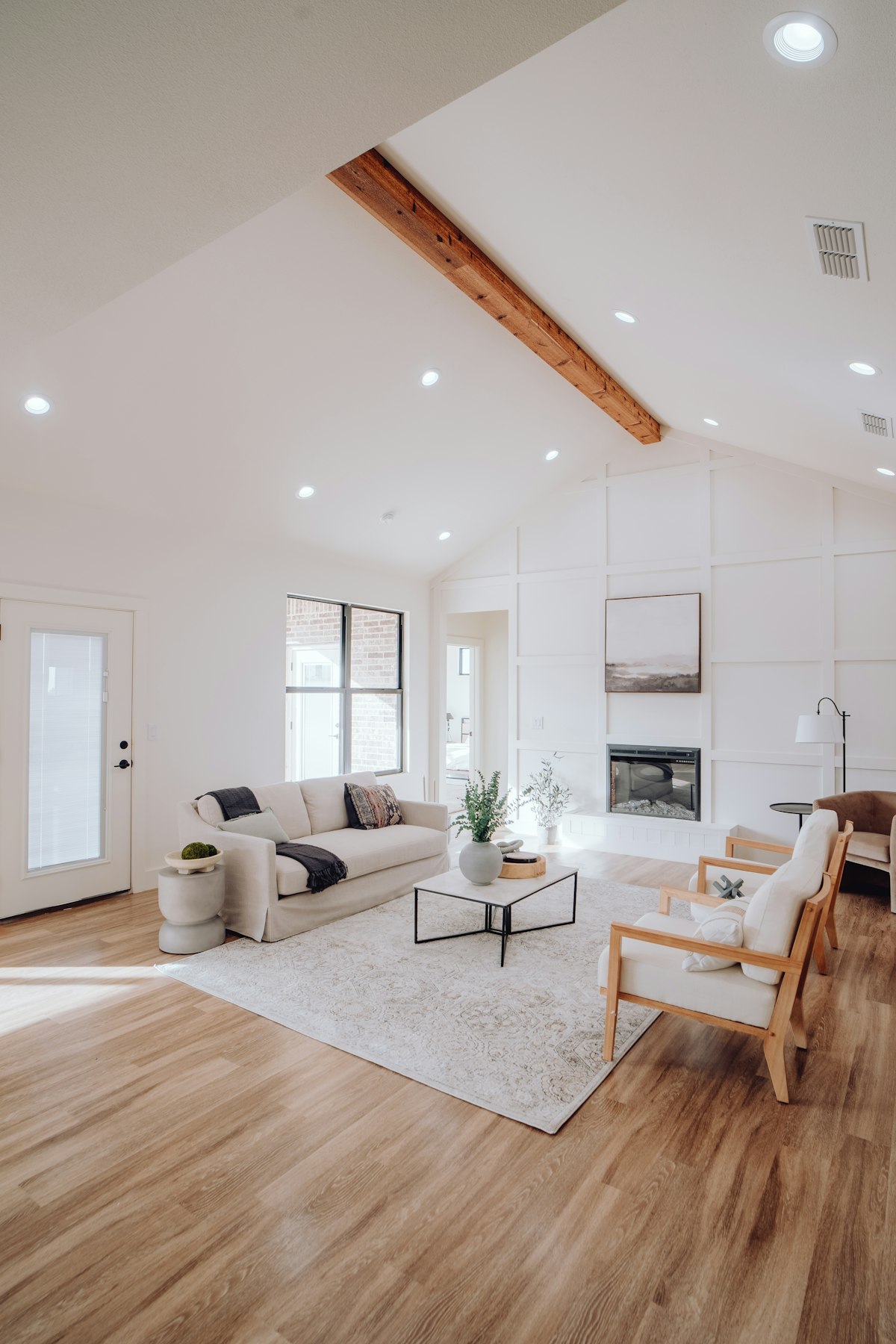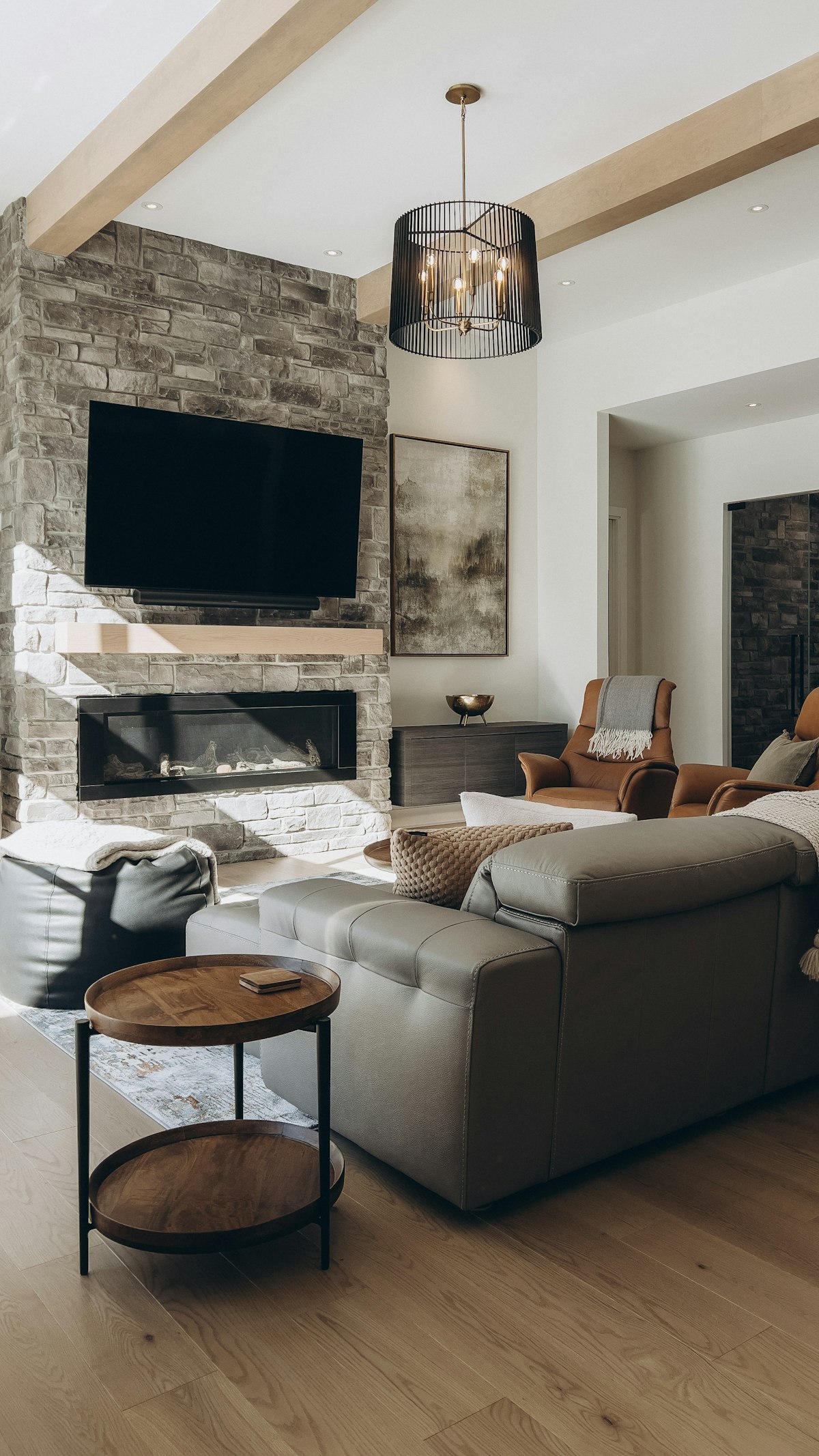
Map the equipment and available outlets before finalizing furniture positions. A lamp or television placed far from power can create trailing leads across the route through the room. Consider a different arrangement before buying decorative cable accessories.
Use products appropriate for the equipment and follow electrical safety guidance. Do not place leads where furniture will crush them or cover them in ways that trap heat. Have a qualified electrician assess permanent outlet changes or concealed wiring work.
Keep plugs and service connections accessible rather than sealing them behind fitted furniture. Label equipment leads if several look alike. A simple plan makes the room easier to clean and maintain while keeping technology visually quieter.
Start with the equipment that genuinely needs to be in the room. Identify lamps, screens, charging points and connected devices, then note where each receives power and how it is used. This may reveal that one rarely used item is creating most of the visible tangle. Removing unnecessary equipment can be more useful than buying a larger cable container. Keep the plan based on actual use instead of designing around every device the household has ever owned.
Review furniture placement before trying to disguise a difficult route. A lamp close to an appropriate outlet may provide the same useful light as one that requires a lead across the room. A television unit can sometimes move slightly without compromising viewing. Do not force the layout to depend on a cord hidden under a rug or squeezed behind a heavy cabinet. Consider the electrical guidance for the actual equipment and obtain professional advice where a permanent change is needed.
Give connections enough access for ordinary maintenance. A neat arrangement becomes frustrating if a plug cannot be reached without moving a large fitted unit. Connected equipment may also need ventilation and space around its leads according to the manufacturer. Avoid packing everything tightly into a decorative box without considering those requirements. Ask how each component will be disconnected or replaced. Visual order should come from a workable arrangement, not from making the equipment inaccessible.
Label similar leads where that will help future changes, using an appropriate method that does not damage the equipment. Keep a simple record of what connects to what if the setup is complex. This can prevent repeated pulling and rearranging whenever one device is replaced. Leave service loops only as appropriate for the products and situation, rather than building an unnecessary coil of spare cable. The purpose is clarity and suitable access, not concealing a growing collection of unused connections.
Check the arrangement while furniture is occupied and moved in its normal ways. A reclining seat, a rolling chair or a cabinet door can affect a lead that appeared clear during setup. Keep cleaning access in mind too. Have damaged or uncertain components assessed appropriately rather than covering them to improve the appearance. A well planned cable arrangement makes the room easier to maintain and use, with technology supporting the living space instead of dictating awkward routes through it.
Measure your own room and check furniture, fixing and care instructions before buying. Have heavy wall mounted items and permanent electrical changes assessed by competent professionals where the installation requires it.